

The World's Greatest Entertainer
1920s through the 1940s
- He was in about 20 Movies!
- He sang California, Here I Come!
- In 1927 he was the star in the Jazz Singer which was the first full length movie with sound! It was the first talkie, an actual talking picture! This marked the end of the silent film era!
- In 1946 they made The Jolson Story, a movie about his career! It won two Oscars (for the Score and the Sound)!
AKA
- Jolie
- Asa Yoelson
Al Jolson
Motion Pictures Category Star
- Ceremony was on February 8, 1960

Al Jolson
Radio Category Star
- Ceremony was on February 8, 1960
Al Jolson
Recording Category Star
- Ceremony was on February 8, 1960
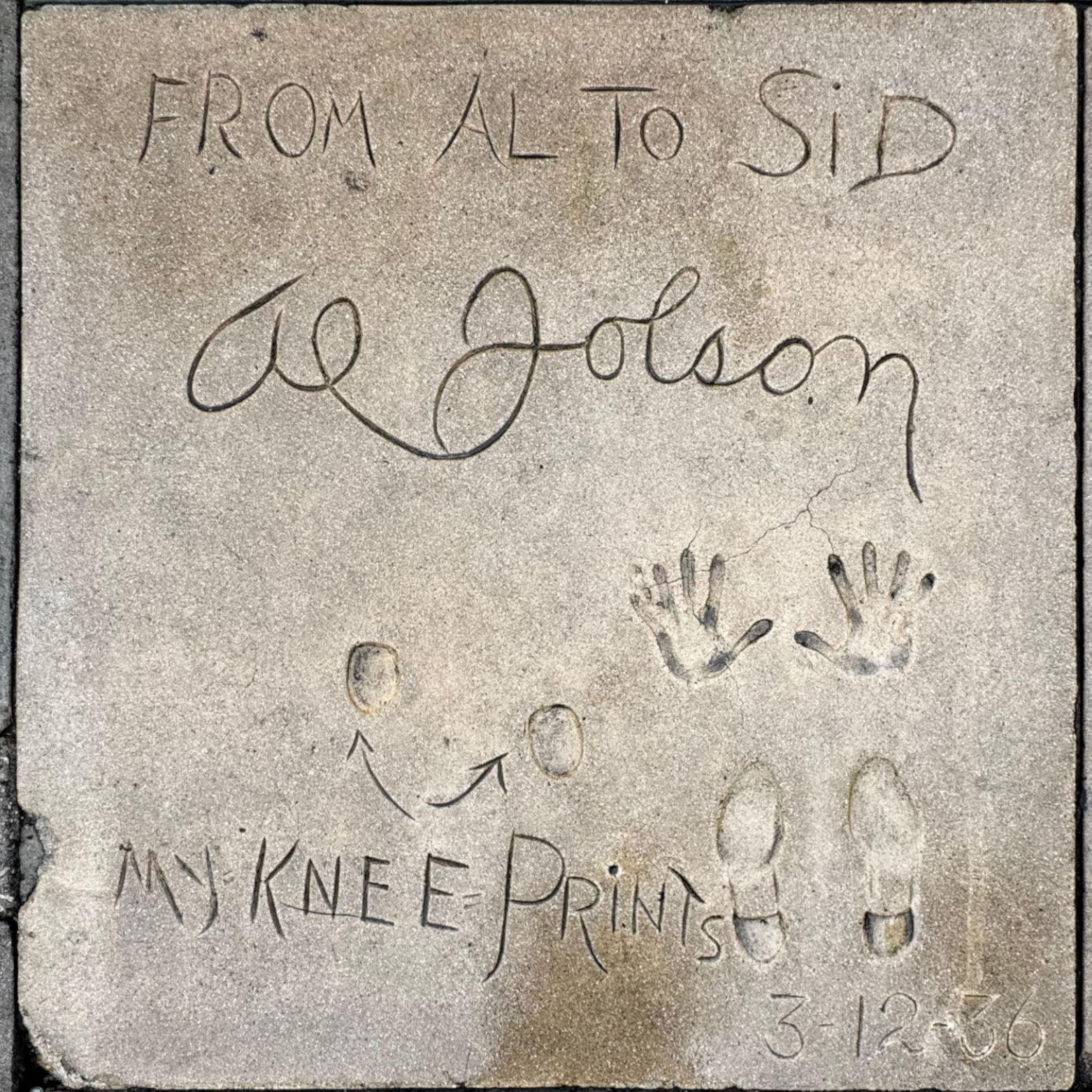
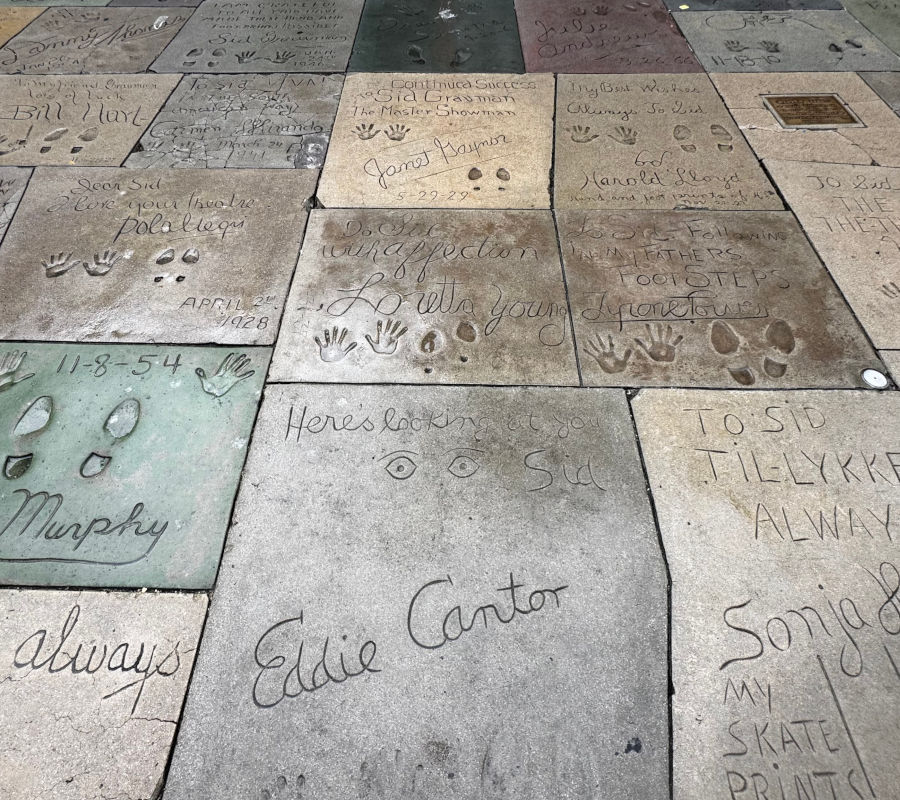
Grauman's Chinese Theatre
Known for singing on his knees
- FROM AL TO SID
- Al Jolson
- *Knee Prints*
- MY KNEE PRINTS
- *Handprints*
- *Footprints*
- 3-12-36
He did his knee prints too!
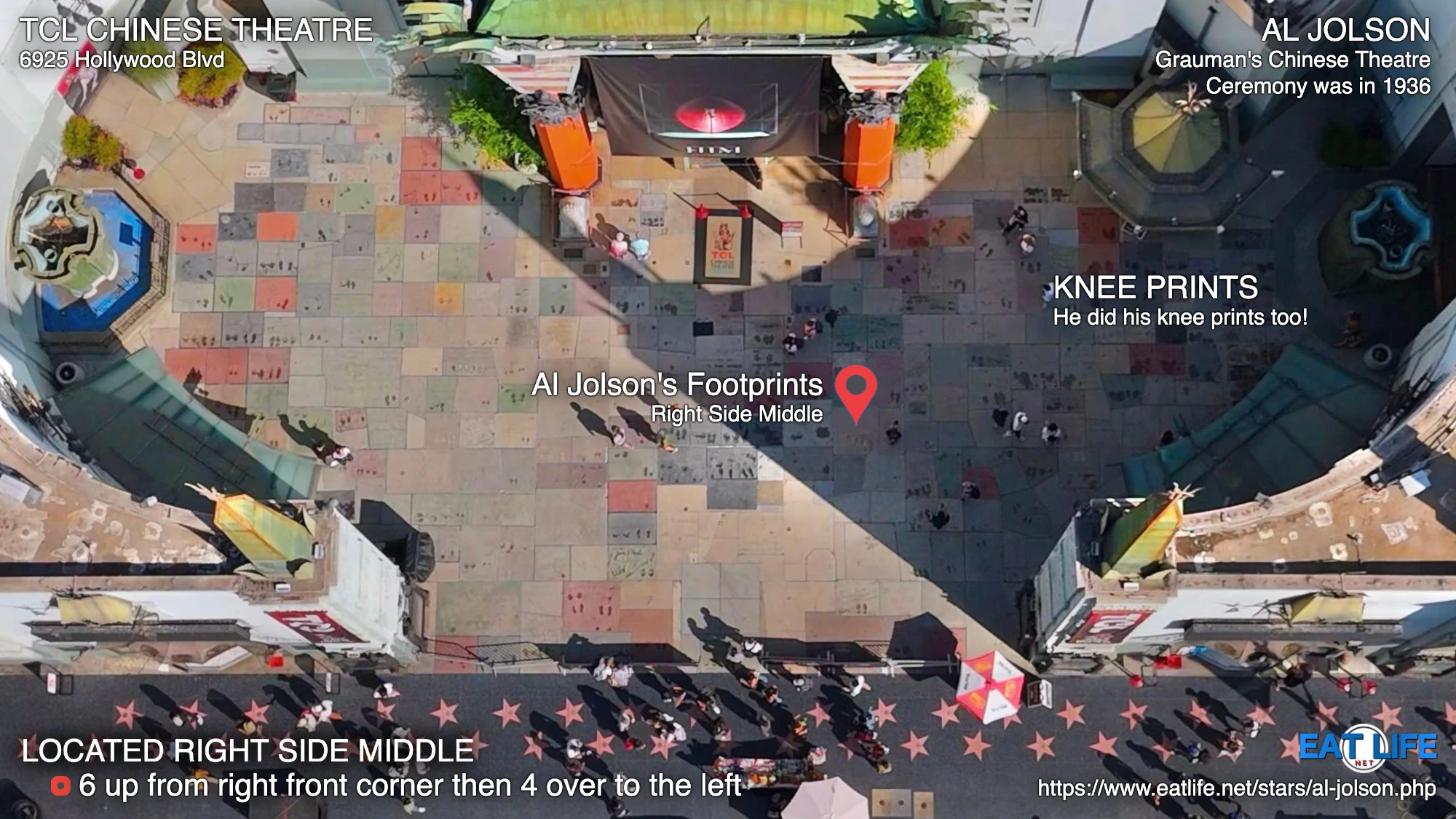
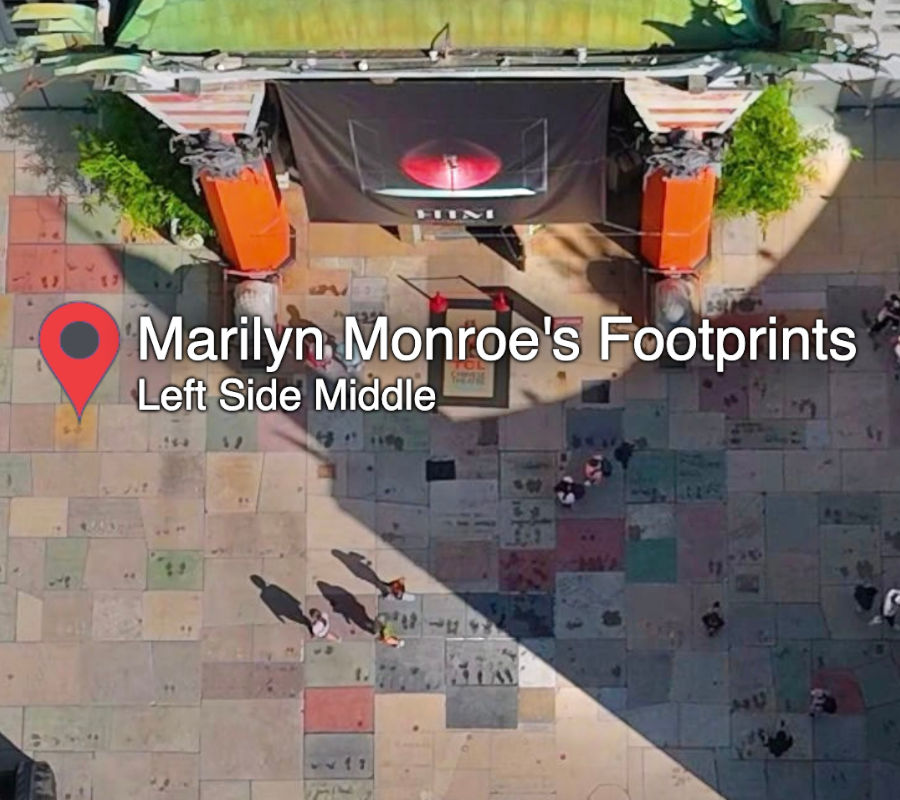
Al Jolson's Footprints
Right Side Middle


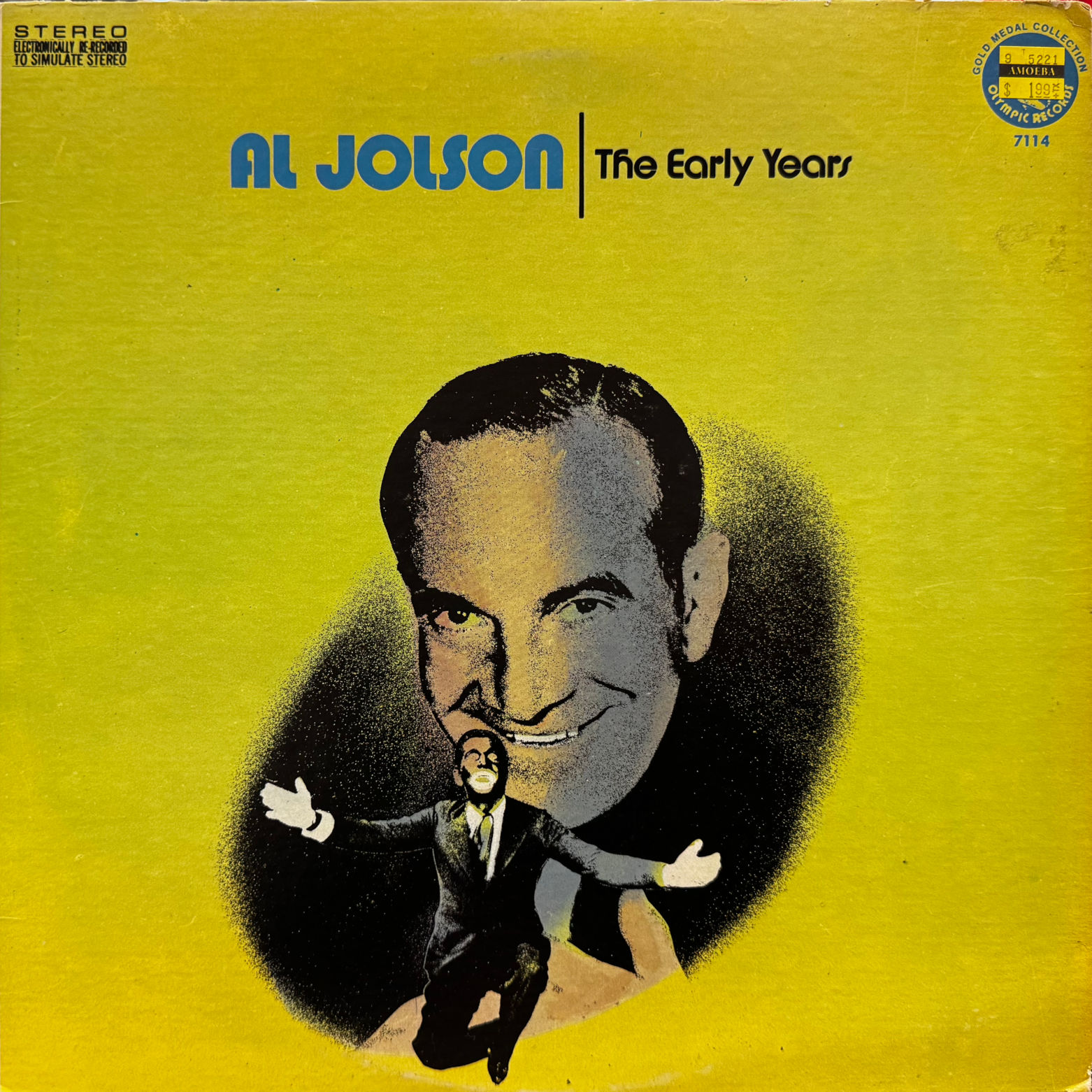
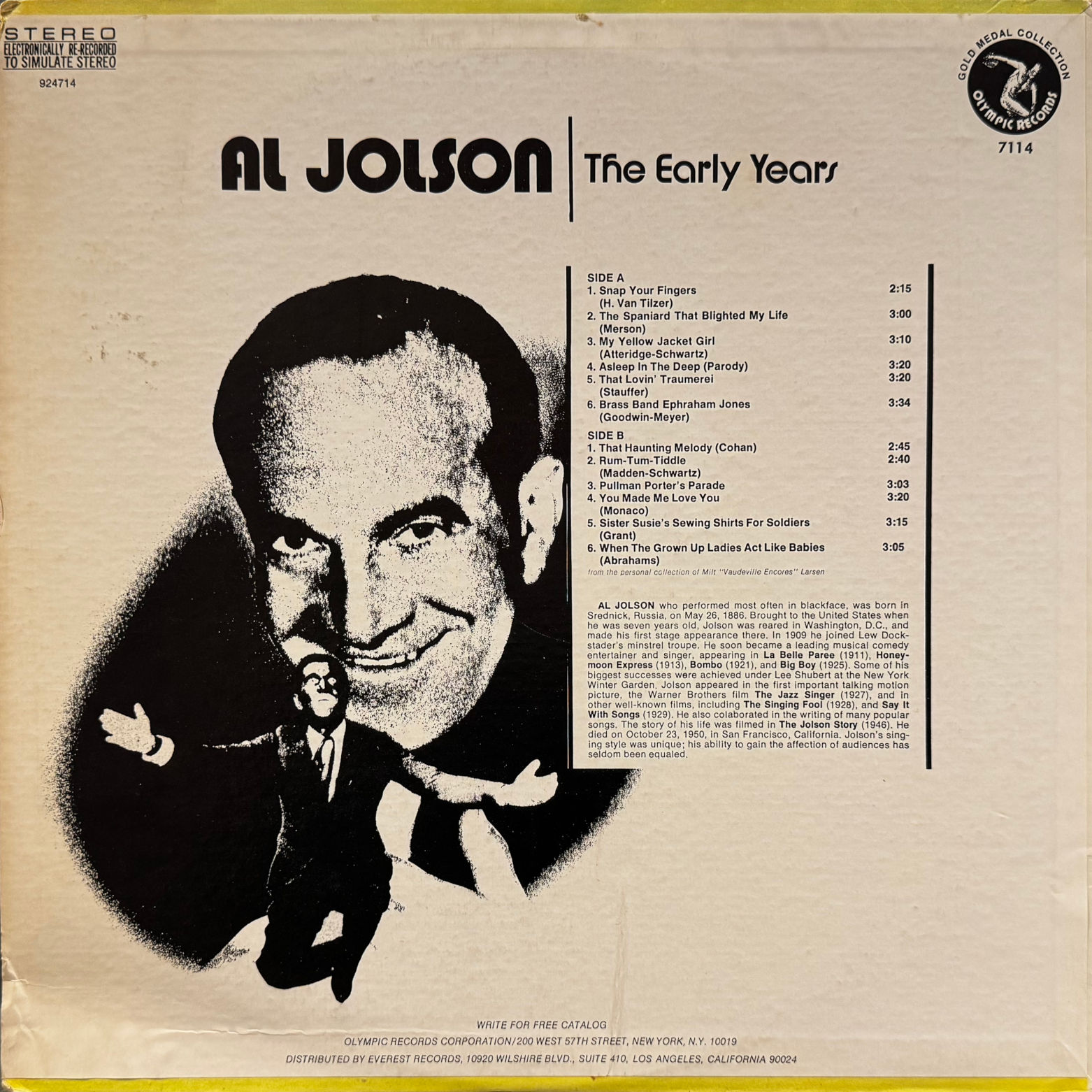
The Early Years
AL JOLSON who performed most often in blackface, was born in Srednick, Russia, on May 26, 1886. Brought to the United States when he was seven years old, Jolson was reared in Washington, D.C., and made his first stage appearance there. In 1909 he joined Lew Dock-stader's minstrel troupe. He soon became a leading musical comedy entertainer and singer, appearing in La Belle Paree (1911), Honeymoon Express (1913), Bombo (1921), and Big Boy (1925). Some of his biggest successes were achieved under Lee Shubert at the New York Winter Garden.
Jolson appeared in the first important talking motion picture, the Warner Brothers film The Jazz Singer (1927), and in other well-known films, including The Singing Fool (1928), and Say it With Songs (1929). He also collaborated in the writing of many popular songs. The story of his life was filmed in The Jolson Story (1946). He died on October 23, 1950, in San Francisco, California. Jolson's singing style was unique; his ability to gain the affection of audiences has seldom been equaled.
Side A
- Snap Your Fingers
- The Spaniard That Blighted My Life
- My Yellow Jacket Girl
- Asleep in The Deep
- That Lovin' Traumerei
- Brass Band Ephram Jones
Side B
- That Haunting Melody
- Rum-Tum-Tiddle
- Pullman Porter's Parade
- You Made Me Love You
- Sister Susie's Sewing Shirts For Soldiers
- When The Grown Up Ladies Act Like Babies
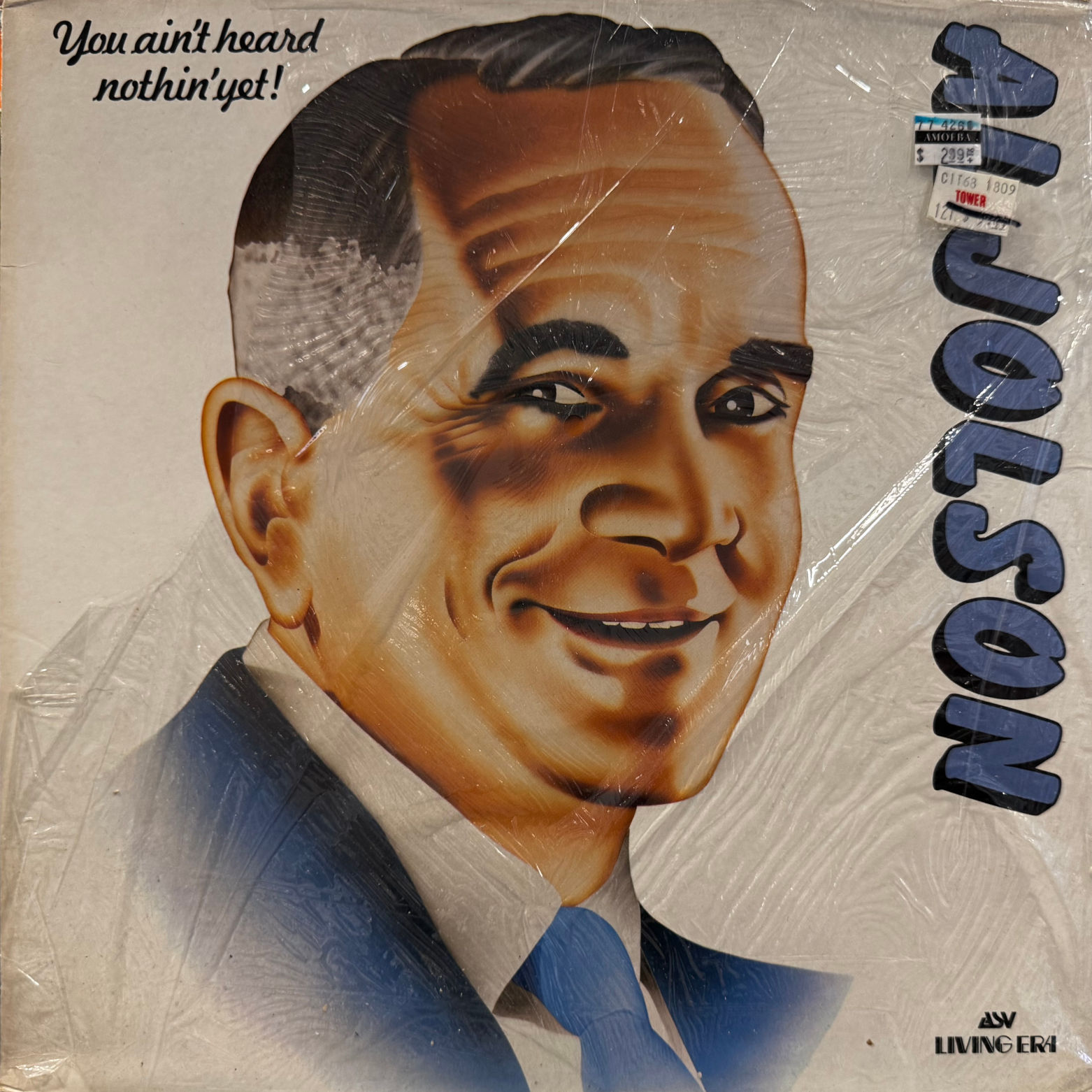
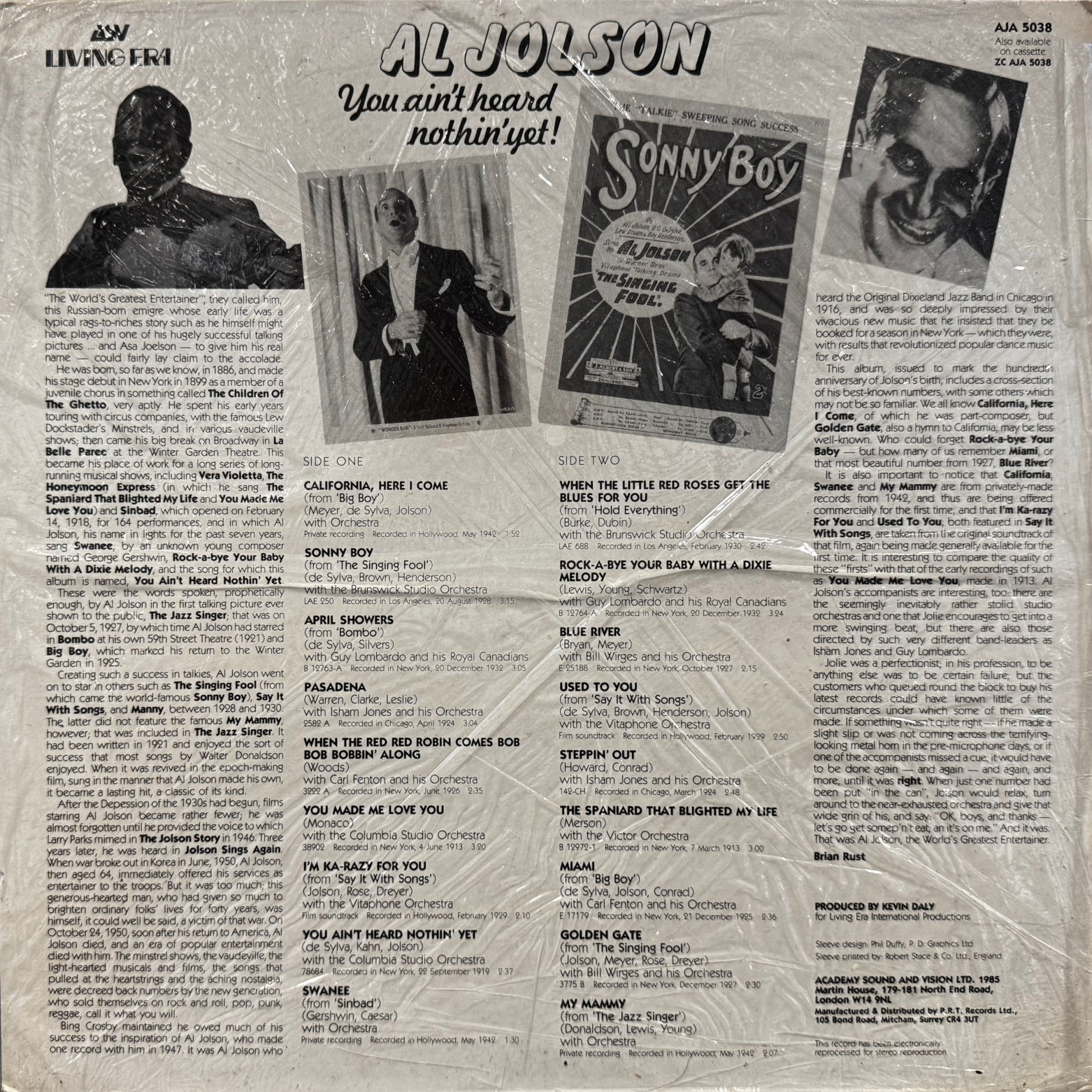
You Ain't Heard Nothin' Yet!
"The World's Greatest Entertainer", they called him, this Russian-born emigre whose early life was a typical rags-to-riches story such as he himself might have played in one of his hugely successful talking pictures... and Asa Joelson - to give him his real name - could fairly lay claim to the accolade.
He was born, so far as we know, in 1886, and made his stage debut in New York in 1899 as a member of a juvenile chorus in something called The Children Of The Ghetto, very aptly. He spent his early years touring with circus companies, with the famous Lew Dockstader's Minstrels, and in various vaudeville shows, then came his big break on Broadway in La Belle Paree at the Winter Garden Theatre. This became his place of work for a long series of long-running musical shows, including Vera Violetta, The Honeymoon Express (in which he sang The Spaniard That Blighted My Life and You Made Me Love You) and Sinbad, which opened on February 14, 1918, for 164 performances, and in which Al Jolson, his name in lights for the past seven years, sang Swanee, by an unknown young composer named George Gershwin, Rock-a-bye Your Baby With A Dixie Melody, and the song for which this album is named, You Ain't Heard Nothin' Yet.
These were the words spoken, prophetically enough, by Al Jolson in the first talking picture ever shown to the public, The Jazz Singer, that was on October 5, 1927, by which time Al Jolson had starred in Bombo at his own 59th Street Theatre (1921) and Big Boy, which marked his return to the Winter Garden in 1925.
Creating such a success in talkies, Al Jolson went on to star in others such as The Singing Fool (from which came the world-famous Sonny Boy), Say It With Songs, and Manny, between 1928 and 1930. The latter did not feature the famous My Mammy, however; that was included in The Jazz Singer. It had been written in 1921 and enjoyed the sort of success that most songs by Walter Donaldson enjoyed. When it was revived in the epoch-making film, sung in the manner that Al Jolson made his own, it became a lasting hit, a classic of its kind.
After the Depression of the 1930s had begun, films starring Al Jolson became rather fewer; he was almost forgotten until he provided the voice to which Larry Parks mimed in The Jolson Story in 1946. Three years later, he was heard in Jolson Sings Again. When war broke out in Korea in June, 1950, Al Jolson, then aged 64, immediately offered his services as entertainer to the troops. But it was too much; this generous-hearted man, who had given so much to brighten ordinary folks lives for forty years, was himself, It could well be said, a victim of that war. On October 24,1950, soon after his retum to America, Al Jolson died, and an era of popular entertainment died with him. The minstrel shows, the vaudeville, the light-hearted musicals and films, the songs that pulled at the heartstrings and the aching nostalgia were decreed back numbers by the new generation, who sold themselves on rock and roll, pop, punk, reggae, call it what you will.
Bing Crosby maintained he owed much of his success to the inspiration of Al Jolson, who made one record with him in 1947. It was Al Jolson who heard the Original Dixieland Jazz Band in Chicago in 1916, and was so deeply impressed by their vivacious new music that he insisted that they be booked for a season in New York - which they were, with results that revolutionized popular dance music for ever.
This album, issued to mark the hundredth anniversary of Jolson's birth, includes a cross-section of his best-known numbers, with some others which may not be so familiar. We all know California, Here I Come, of which he was part-composer, but Golden Gate, also a hymn to California, may be less well-known. Who could forget Rock-a-bye Your Baby-but how many of us remember Miami, or that most beautiful number from 1927, Blue River?
It is also important to notice that California, Swanee and My Mammy are from privately-made records from 1942, and thus are being commercially for the first time, and that I'm Ka-razy For You and Used To You, both featured in Say It With Songs, are taken from the original soundtrack of that film, again being made generally available for the first time. It is interesting to compare the quality of these "firsts" with that of the early recordings of such as You Made Me Love You, made in 1913. Al Jolson's accompanists are interesting, too: there are the seemingly inevitably orchestras and one that Jolie encourages to get into a more swinging beat, but there are also those directed by such very different band-leaders as Isham Jones and Guy Lombardo.
Jolie was a perfectionist; in his profession, to be anything else was to be certain failure, but the customers who queued round the block to buy his latest records could have known little of the circumstances under which some of them were made. If something wasn't quite right-- if he made a slight slip or was not coming across the terkying. looking metal horn in the pre-microphone days, or if one of the accompanists missed a cue, it would have to be done again — and again - and again, and more, until it was right. When just one number had been put "in the can", Jolson would relax, tum around to the near-exhausted orchestra and give that wide grin of his, and say: "OK, boys, and thanks let's go get somep'n't eat, an it's on me." And it was. That was Al Jolson, the World's Greatest Entertainer.
Brian Rust
Side A
- California, Here I Come (from "Big Boy")
- Sonny Boy (from "The Singing Fool")
- April Showers (from "Bombo")
- Pasadena
- When The Red Red Robin Comes Bob Bob Bobbin' Along
- You Made Me Love You
- I'm Ka-Razy For You (from "Say It with Songs")
- You Ain't Heard Nothin' Yet
- Swanee (from "Sinbad")
Side B
- When The Little Red Roses Get The Blues For You (from "Hold Everything")
- Rock-A-Bye Your Baby with a Dixie Melody
- Blue River
- Used to You (from "Say it with Songs")
- Steppin' Out
- The Spaniard That Blighted My Life
- Miami (from "Big Boy")
- Golden Gate (from "The Singing Fool")
- My Mammy (from "The Jazz Singer")
As an Amazon Associate we earn from qualifying purchases
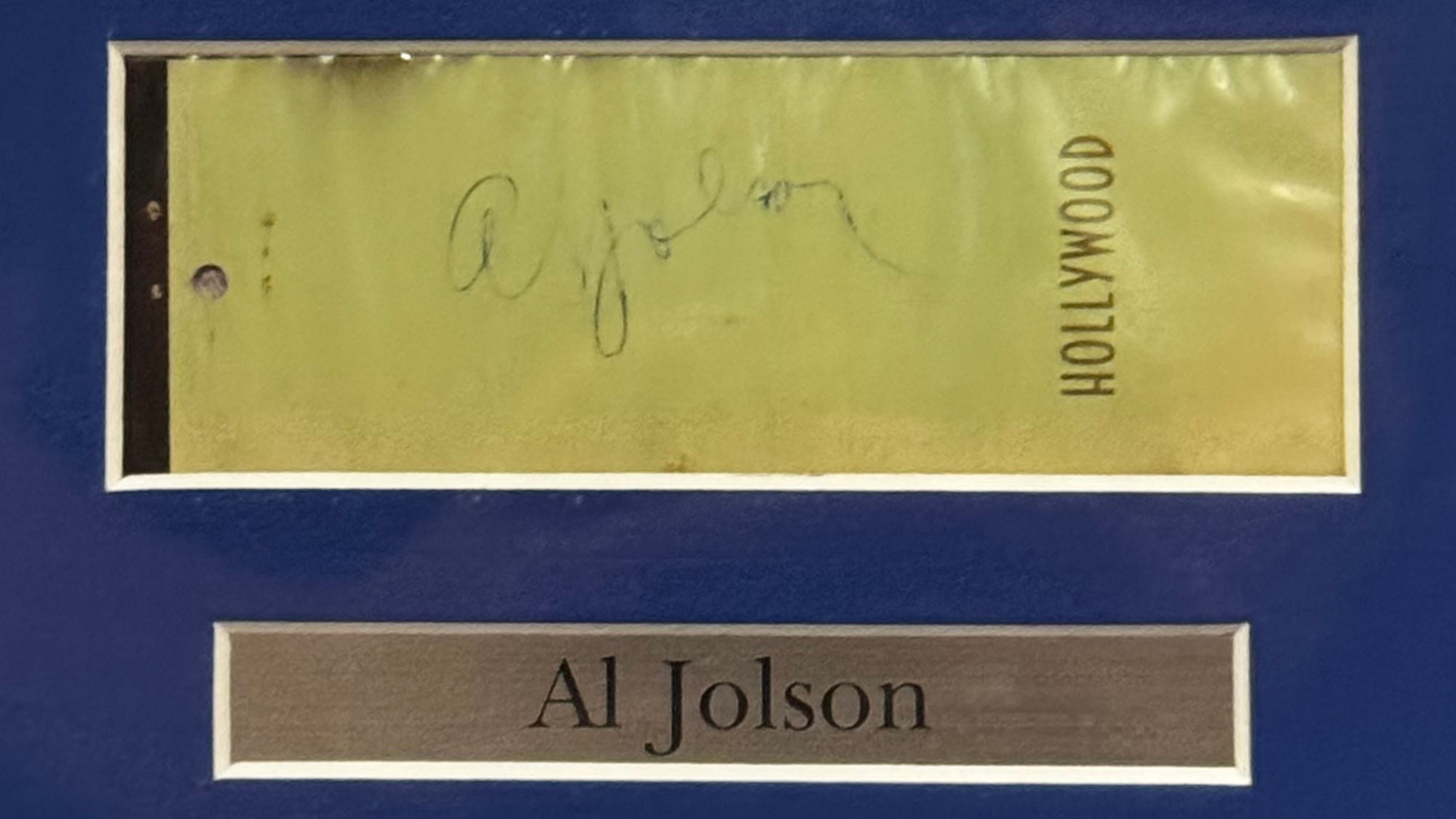
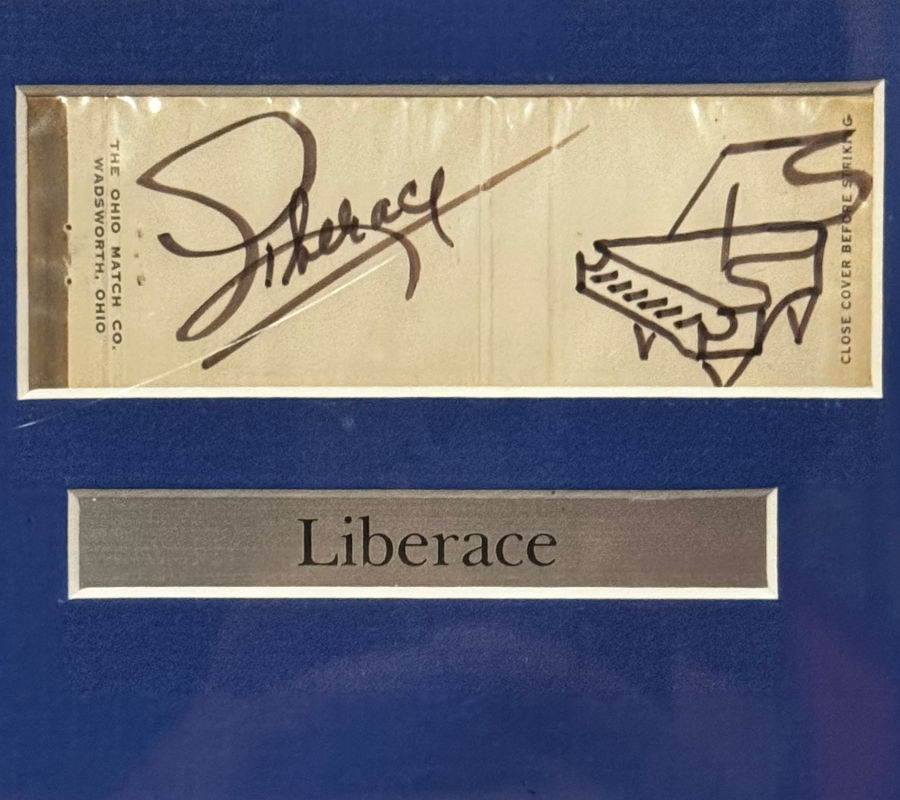
Al Jolson
Autographed Matchbook