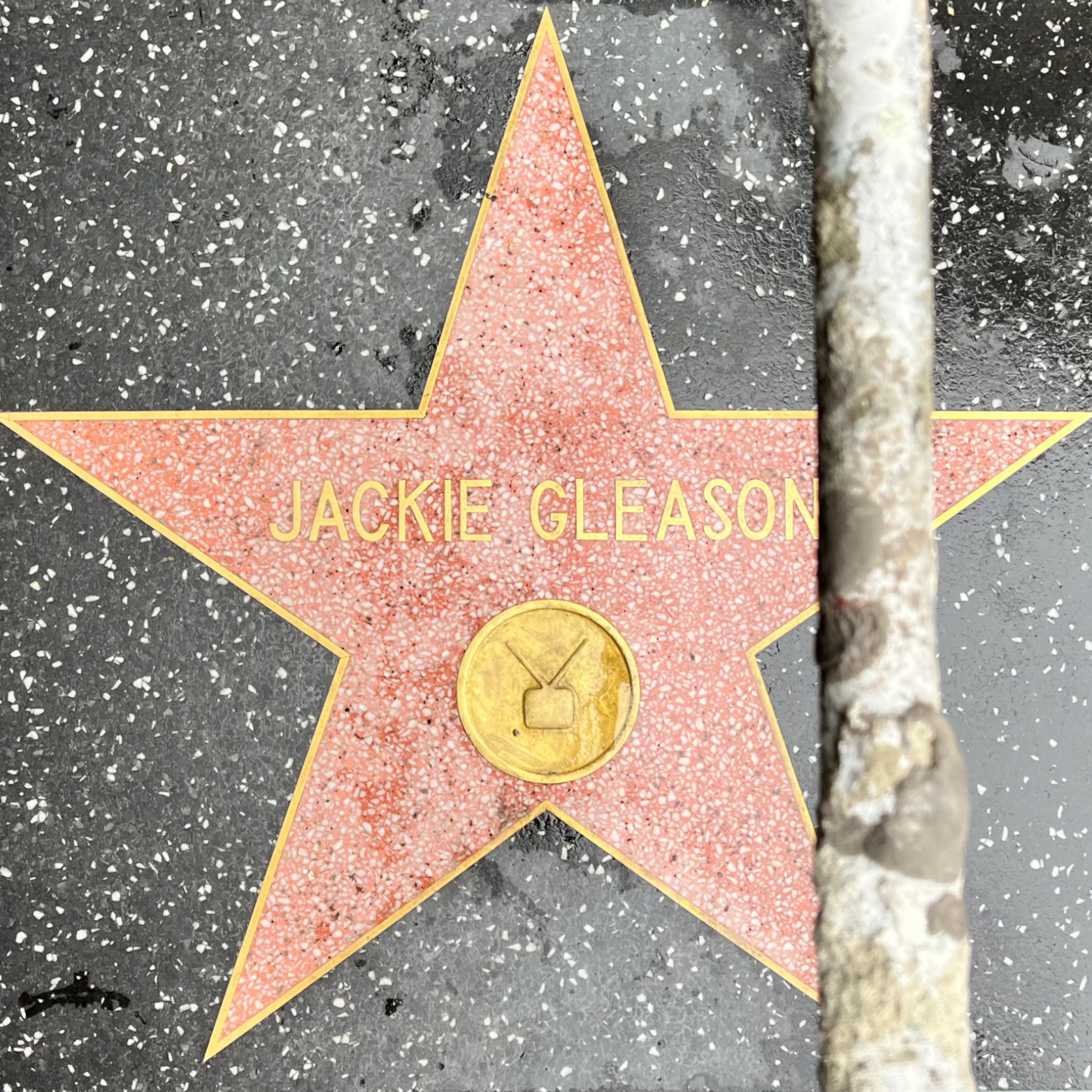


Gene Kelly
Motion Pictures Category Star
- Ceremony was on February 8, 1960

Christmas Holiday
⭐ ⭐ Gene Kelly and another Hollywood Walk of Famer!
- EAT LIFE:
[https://www.eatlife.net/movies/christmas-holiday.php] - YOUTUBE:
[https://www.youtube.com/watch?v=MohRnxRWuGc] - DVD AT AMAZON:
[https://www.amazon.com/dp/B09M28PK2P]
An American in Paris
⭐ ⭐ ⭐ ⭐ ⭐ Gene Kelly plus 4 other Hollywood Walk of Famers!
- EAT LIFE:
[https://www.eatlife.net/movies/an-american-in-paris.php] - AMAZON PRIME VIDEO:
[https://www.amazon.com/video/detail/amzn1.dv.gti.0aa9f72b-932c-52c3-d145-64373feb7381] - MULTI FORMAT DISK AT AMAZON:
[https://www.amazon.com/dp/B0018KGVA4]
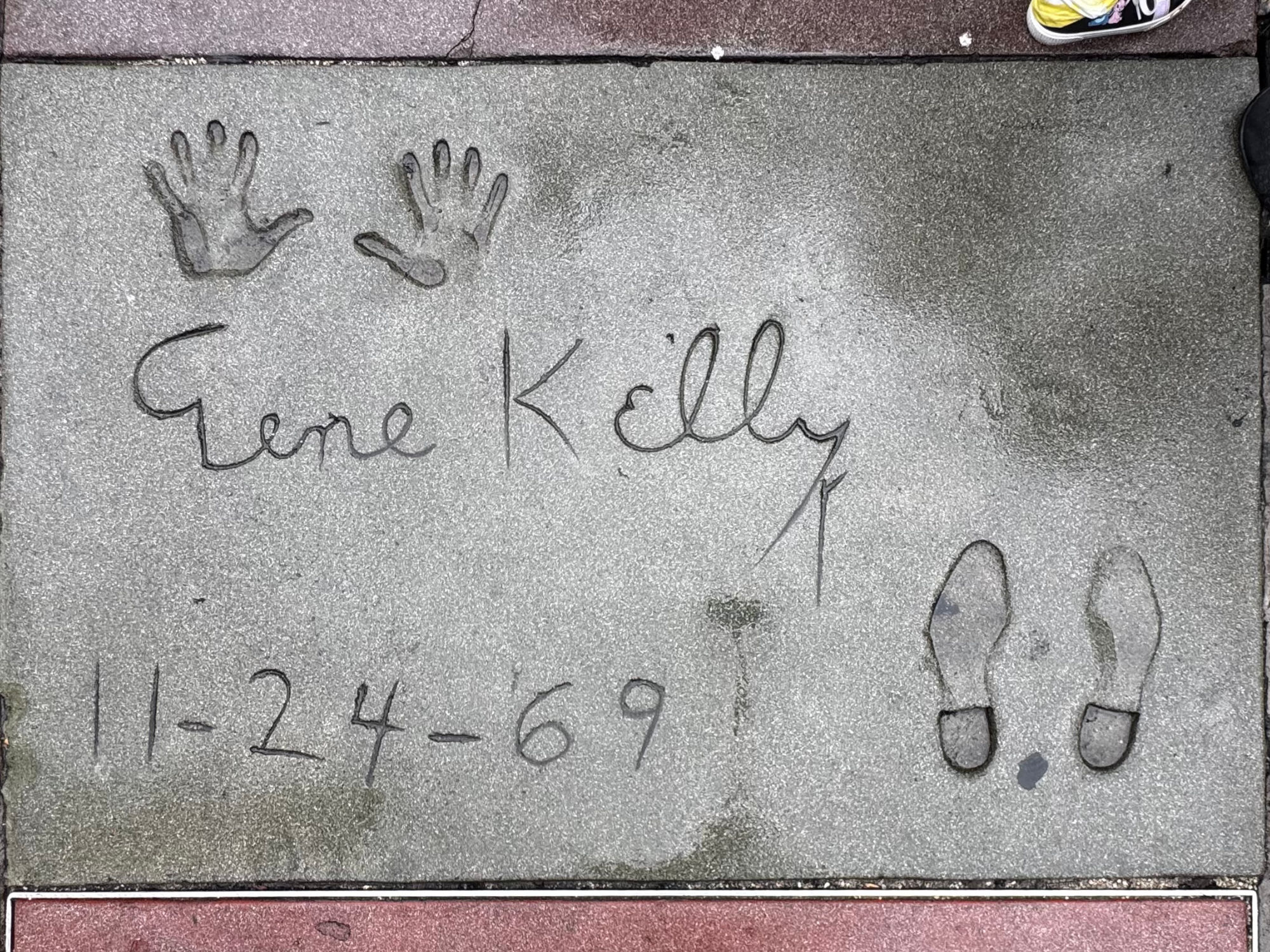
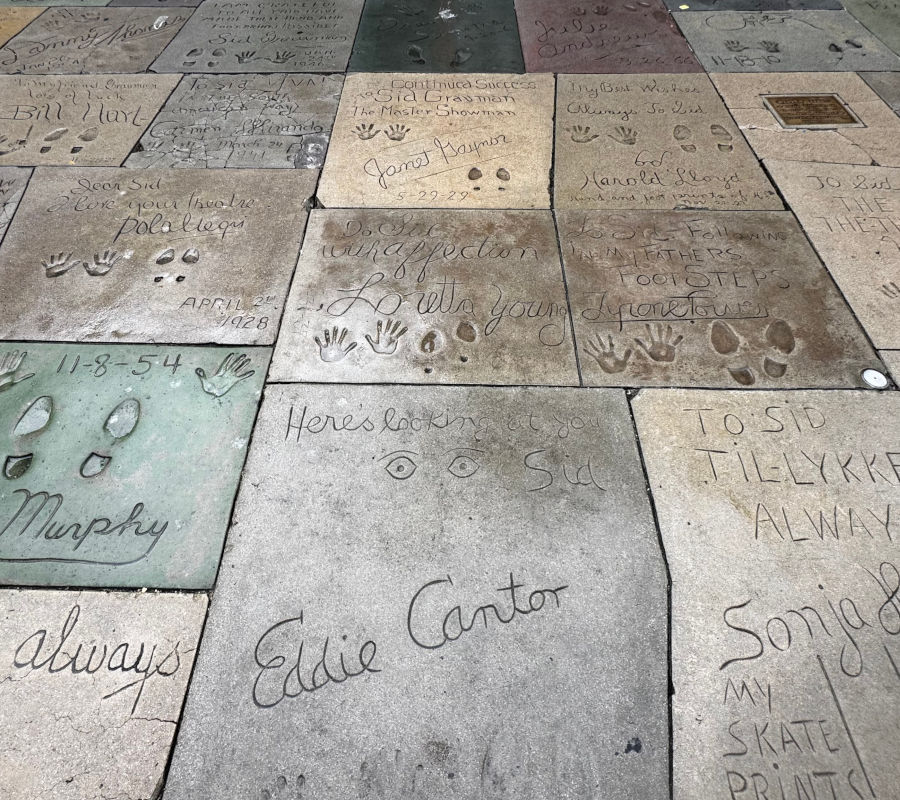
Grauman's Chinese Theatre
- *Handprints*
- Gene Kelly
- 11-24-69
- *Footprints*

Gene Kelly's Footprints
Left Side Towards Center Lower Third


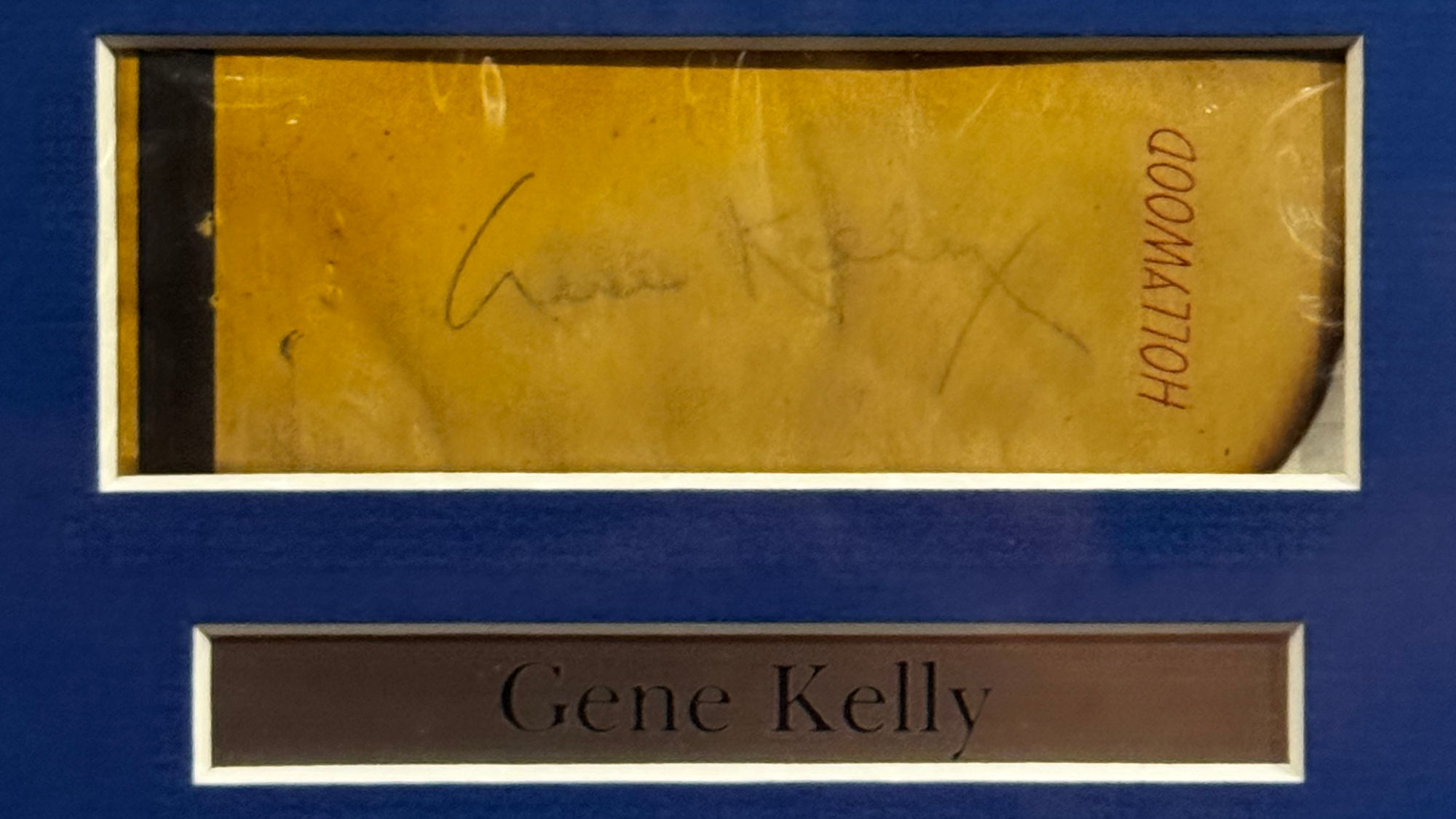
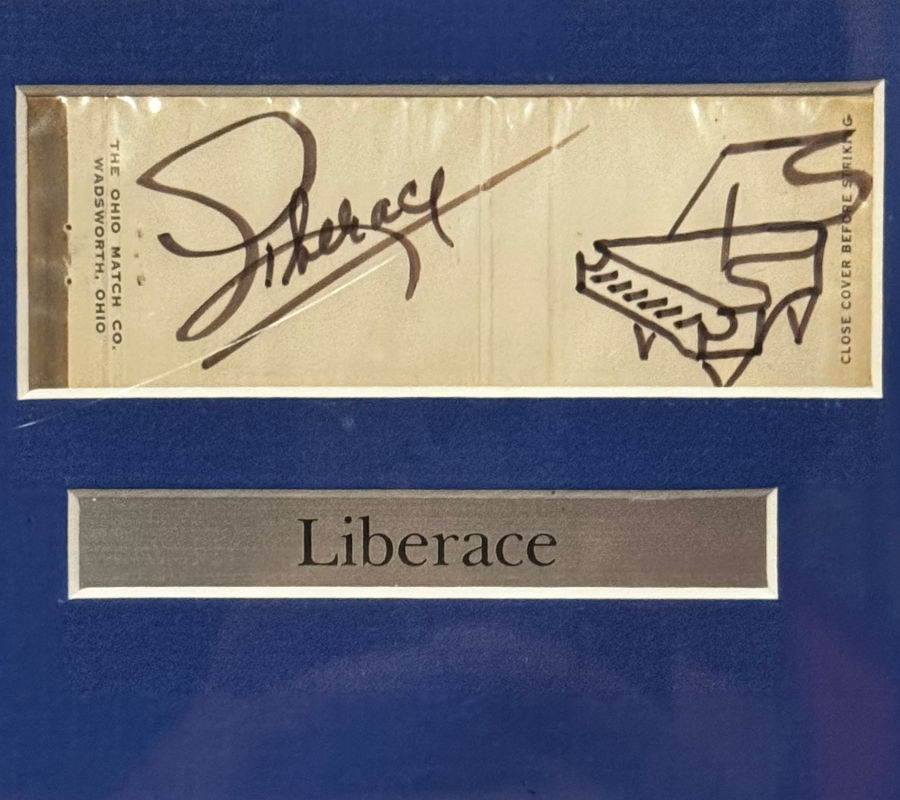
Gene Kelly
Autographed Matchbook
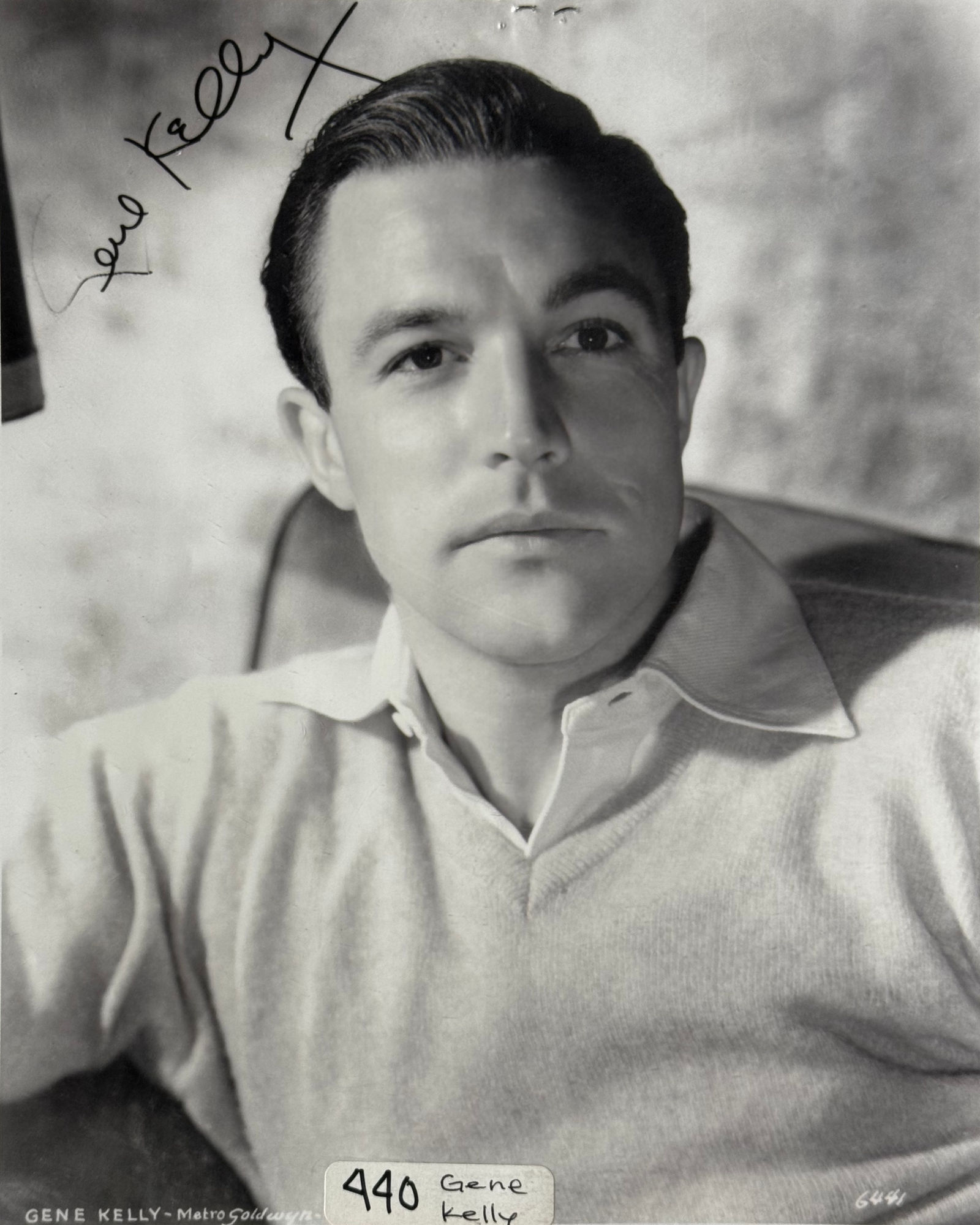
Signed
Hollywood Blvd Gift Shop Photos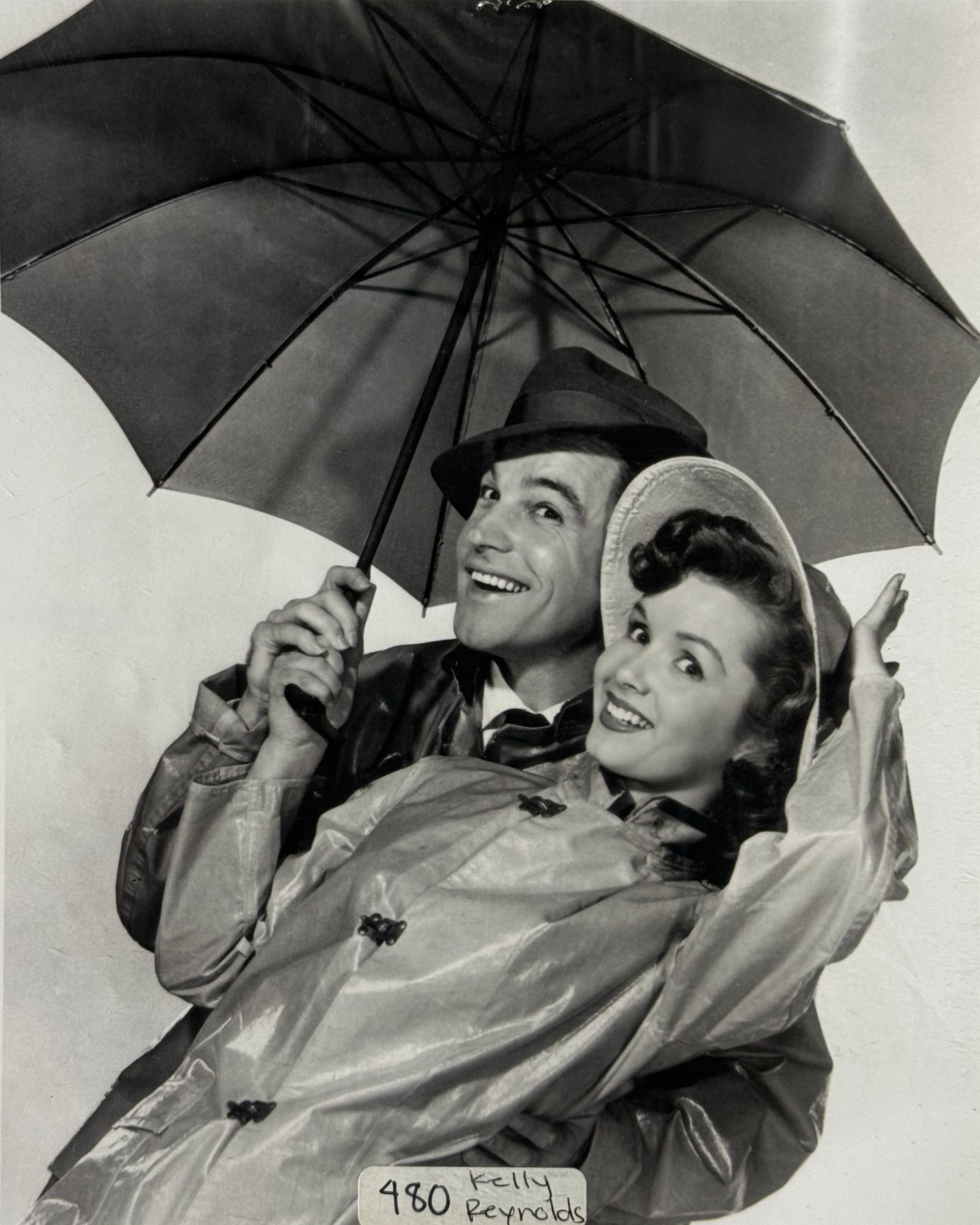
Singin' in the Rain
With Debbie Reynolds in 1952
As Don Lockwood and Kathy Selden posing under an umbrella Hollywood Blvd Gift Shop Photos
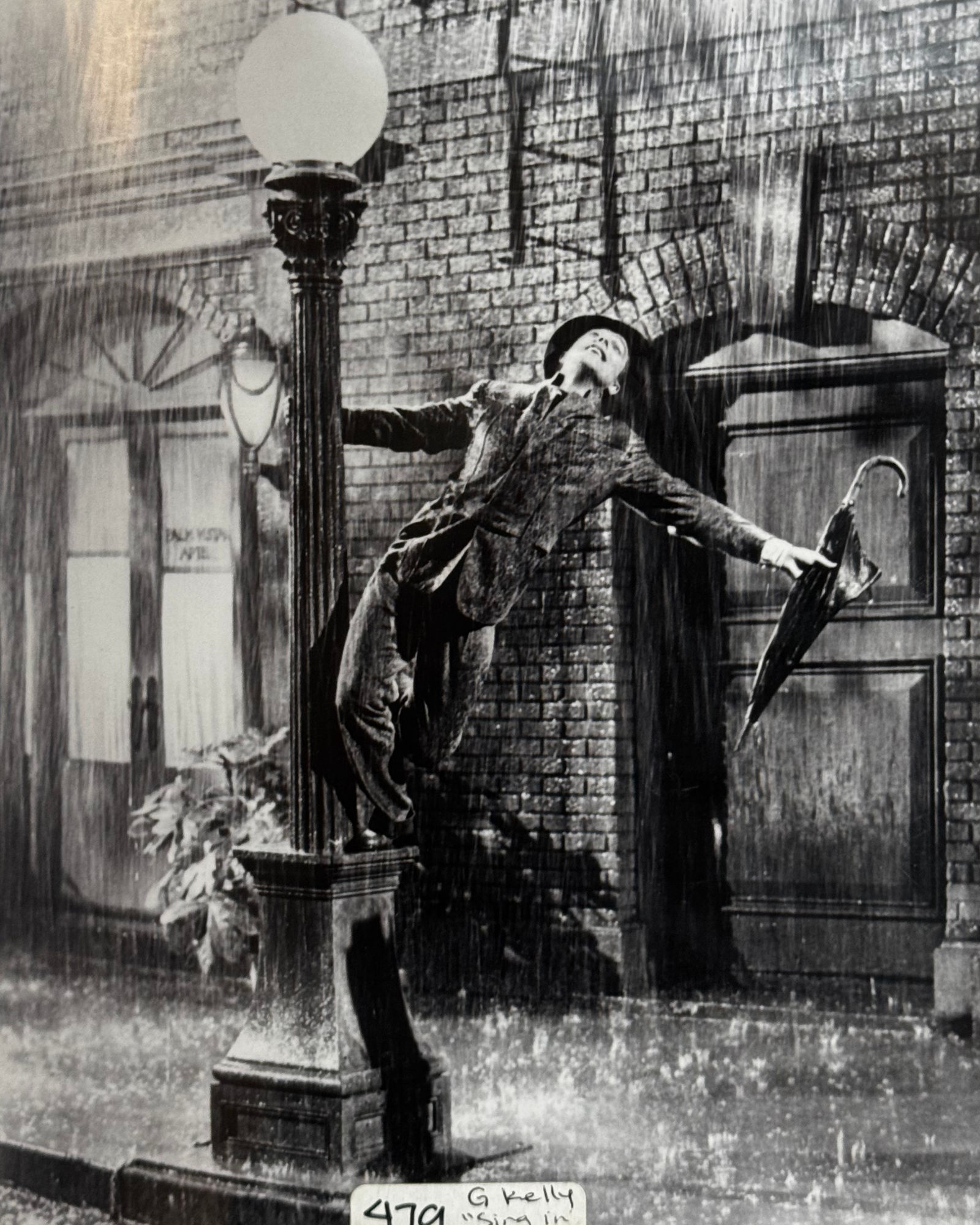
Singin' in the Rain
As Don Lockwood Hollywood Blvd Gift Shop Photos
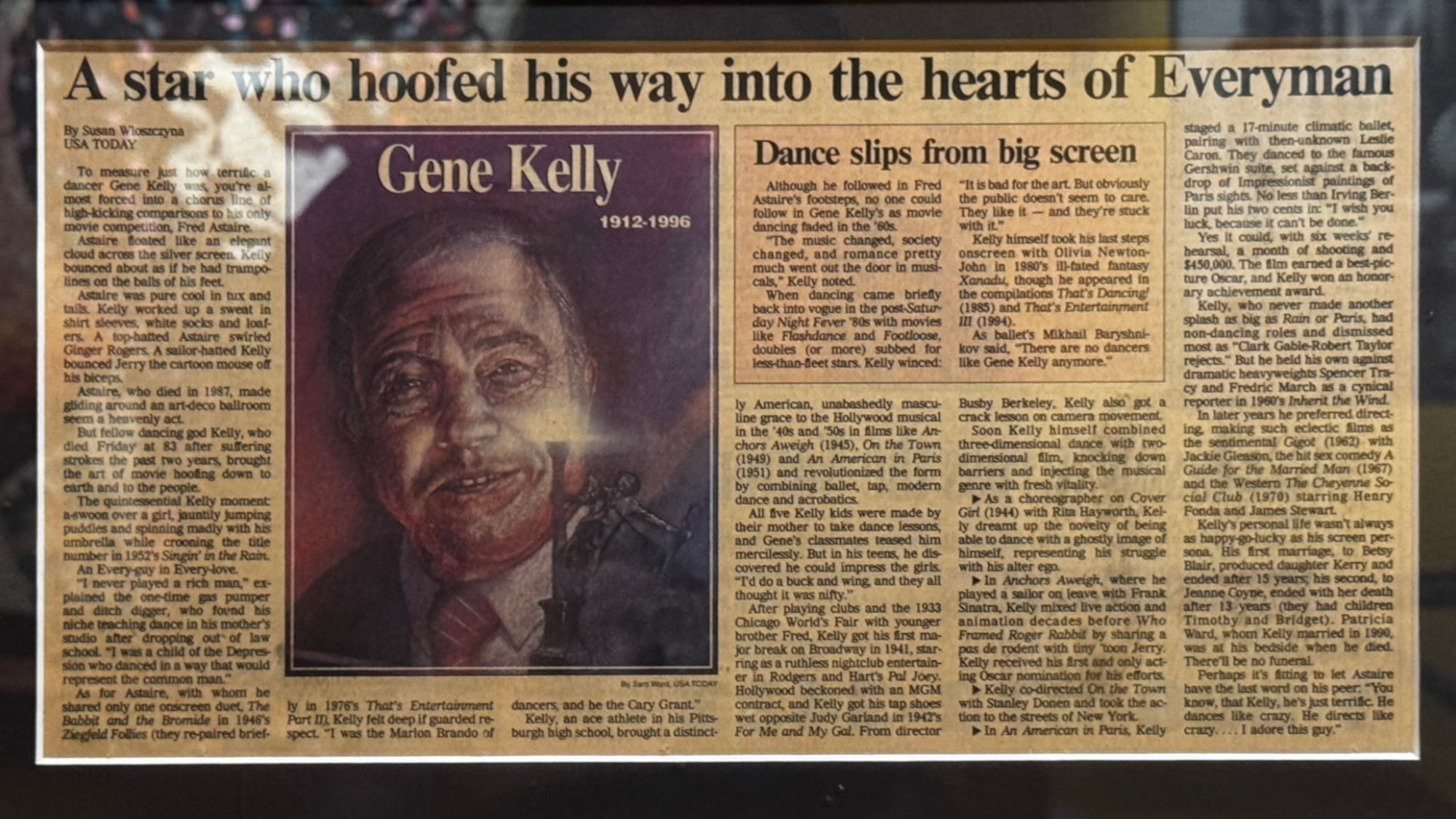
Gene Kelly
A star who hoofed his way into the hearts of Everyman
By Susan Wlaszczyna USA TODAY
To measure just how terrific a dancer Gene Kelly was you're almost forced into a chorus line of high-kicking comparisons to his only movie competition, Fred Astaire.
Astaire Boated like an elegant cloud across the silver screen. Kelly bounced about as if he had trampolines on the balls of his feet.
Astaire was pure cool in tux and tails. Kelly worked up a sweat in shirt sleeves, white socks and loafers. A top-hatted Astaire swirled Ginger Rogers. A sailor-hatted Kelly bounced Jerry the cartoon mouse off his biceps.
Astaire, who died in 1987, made gliding around an art-deco ballroom seem a heavenly act.
But fellow dancing god Kelly, who died Friday at 83 after suffering strokes the past two years, brought the art of movie hoofing down to earth and to the people.
The quintessential Kelly moment: a-swoon over a girl, jauntily jumping puddles and spinning madly with his umbrella while crooning the title number in 1952's Singin' in the Rain.
An Every-guy in Every-love.
"I never played a rich man," explained the one-time gas pumper and ditch digger, who found his niche teaching dance in his mother's studio after dropping out of law school. "I was a child of the Depression who danced in a way that would represent the common man."
As for Astaire, with whom he shared only one onscreen duet, The Babbit and the Bromide in 1946's Ziegfeld Follies (they re-paired briefly in 1976's That's Entertainment Part II), Kelly felt deep if guarded respect. "I was the Marlon Brando of dancers, and he the Cary Grant."
Kelly, an ace athlete in his Pittsburgh high school, brought a distinctly American, unabashedly masculine grace to the Hollywood musical in the '40s and '50s in films like Anchors Aweigh (1945), On the Town (1949) and An American in Paris (1951) and revolutionized the form by combining ballet, tap, modern dance, and acrobatics.
All five Kelly kids were made by their mother to take dance lessons, and Gene's classmates teased him mercilessly. But in his teens, he discovered he could impress the girls "I'd do a buck and wing, and they all thought it was nifty."
After playing clubs and the 1933 Chicago World's Fair with younger brother Fred, Kelly got his first major break on Broadway in 1941, starring as a ruthless nightclub entertainer in Rodgers and Hart's Pal Joey. Hollywood beckoned with an MGM contract, and Kelly got his tap shoes wet opposite Judy Garland in 1942's For Me and My Gal. From director Busby Berkeley, Kelly also got a crack lesson on camera movement.
Soon Kelly himself combined three-dimensional dance with two-dimensional film, knocking down barriers and injecting the musical genre with fresh vitality.
- As a choreographer on Cover Girl (1944) with Rita Hayworth, Kelly dreamt up the novelty of being able to dance with a ghostly image of himself, representing his struggle with his alter ego.
- In Anchors Aweigh, where he played a sailor on leave with Frank Sinatra, Kelly mixed live action and animation decades before Who Framed Roger Rabbit by sharing a pas de rodent with tiny toon Jerry. Kelly received his first and only acting Oscar nomination for his efforts.
- Kelly co-directed On the Town with Stanley Donen and took the action to the streets of New York.
- In An American in Paris, Kelly staged a 17-minute climatic ballet, pairing with then-unknown Leslie Caron. They danced to the famous Gershwin suite, set against a backdrop of Impressionist paintings of Paris sights. No less than Irving Berlin put his two cents in: "I wish you luck, because it can't be done."
Kelly, who never made another splash as big as Rain or Paris, had non-dancing roles and dismissed most as "Clark Gable - Robert Taylor rejects." But he held his own against dramatic heavyweights Spencer Tracy and Fredric March as a cynical reporter in 1960's Inherit the Wind.
In later years he preferred directing making such eclectic films as the sentimental Gigot (1962) with Jackie Gleason, the hit sex comedy A Guide for the Married Man (1967) and the Western The Cheyenne Social Club (1970) starring Henry Fonda and James Stewart.
Kelly's personal life wasn't always as happy-go-lucky as his screen persona. His first marriage, to Betsy Blair, produced daughter Kerry and ended after 15 years; his second, to Jeanne Coyne, ended with her death after 13 years (they had children Timothy and Bridget). Patricia Ward, whom Kelly married in 1990, was at his bedside when he died. There'll be no funeral.
Perhaps it's fitting to let Astaire have the last word on his peer. "You know, that Kelly, he's just terrific. He dances like crazy. He directs like сгаzу... I adore this guy."
Dance slips from big screen
Although he followed in Fred Astaire's footsteps, no one could follow in Gene Kelly's as movie dancing faded in the "60s.
The music changed, society changed, and romance pretty much went out the door in musicals," Kelly noted.
When dancing came briefly back into vogue in the post-Saturday Night Fever '80s with movies like Flashdance and Footloose, doubles (or more) subbed for less-than-fleet stars. Kelly winced: "It is bad for the art. But obviously the public doesn't seem to care. They like it - and they're stuck with it"
Kelly himself took his last steps onscreen with Olivia Newton-John in 1980's ill-fated fantasy Xanadu, though he appeared in the compilations That's Dancing! (1985) and That's Entertainment III (1994).
As ballet's Mikhail Baryshnikov said, "There are no dancers like Gene Kelly anymore."