
1800 to 1809
At the dawn of another century, America set its sights on new horizons.
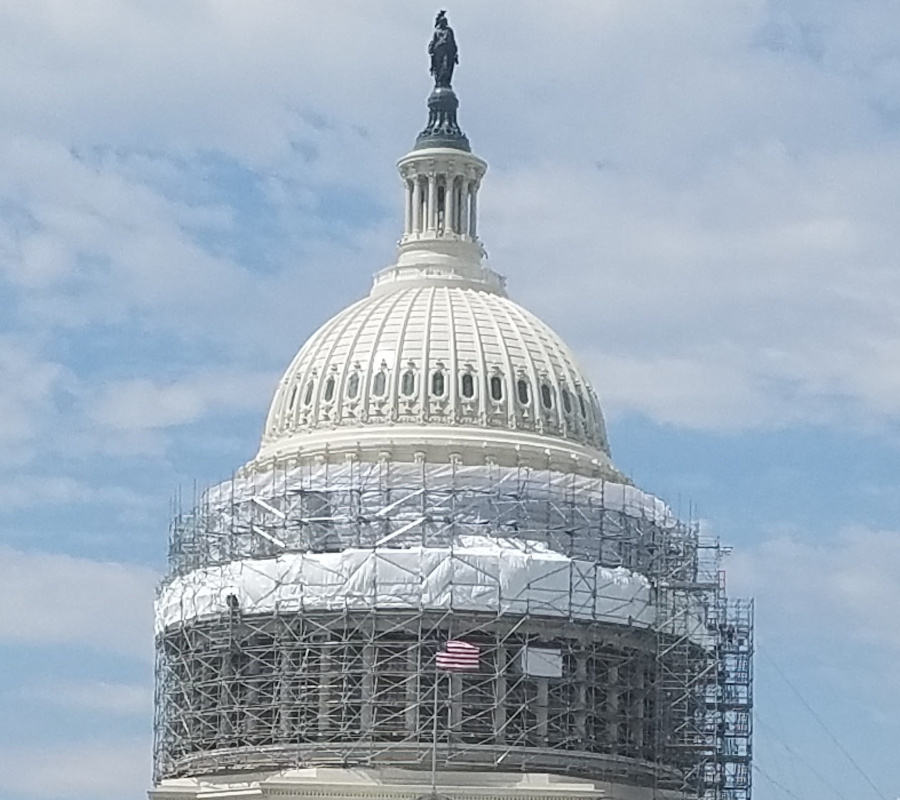
- Washington, D.C. became the nation's permanent capital.
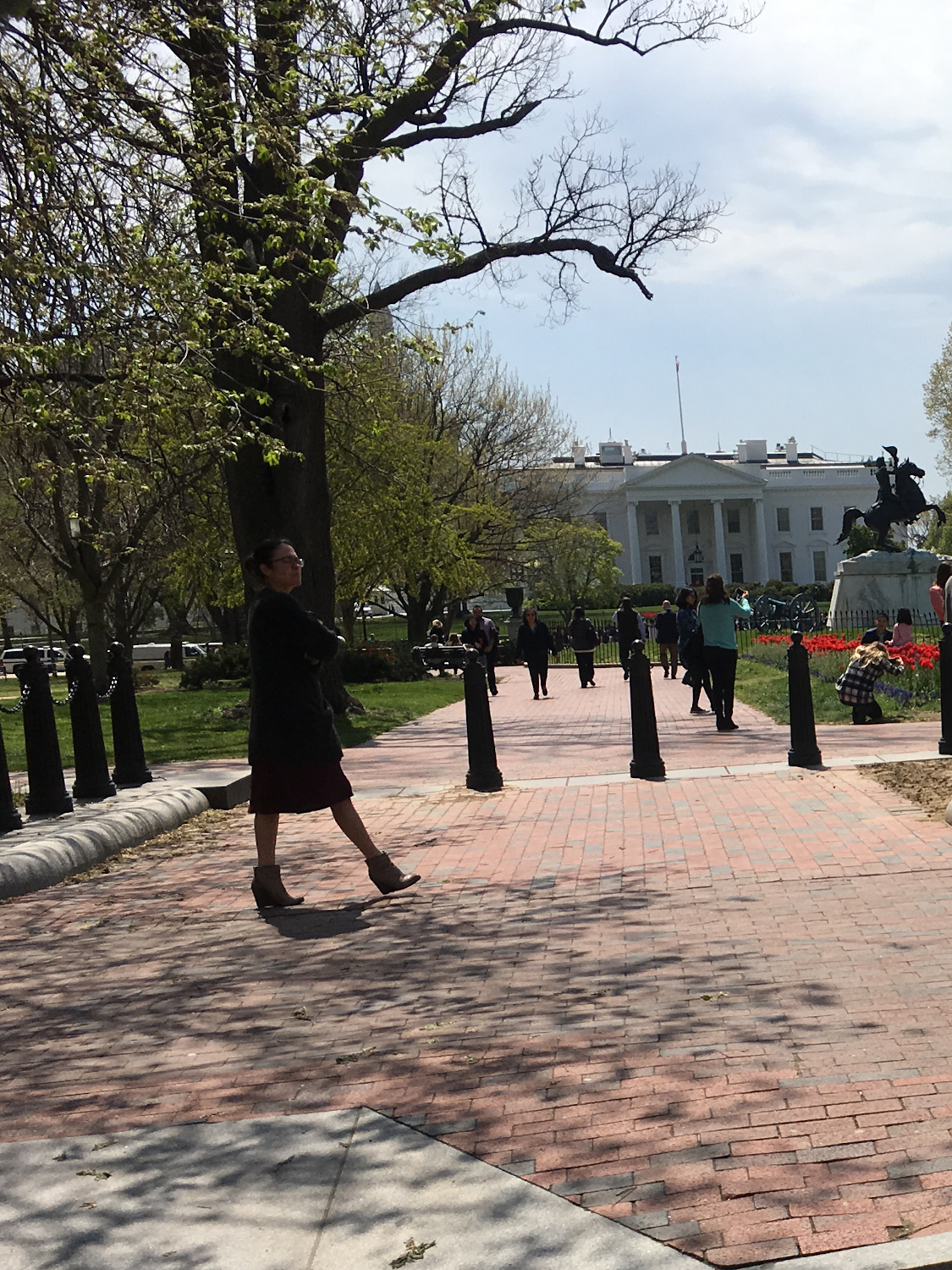
- This transition inspired architectural ingenuity, such as Pierre L'Enfant's cityscape of the capital and James Hoban's plan for the White House.
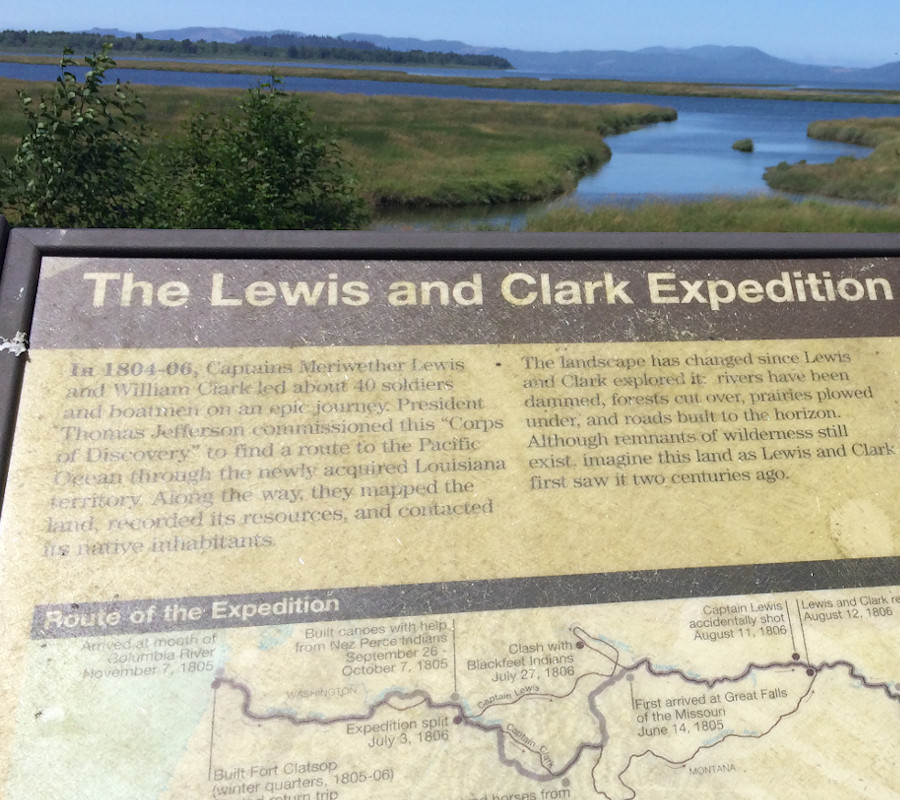
- In 1803 President Thomas Jefferson approved the Louisiana Purchase, more than doubling the country's size and sparking the famous Lewis and Clark expedition one year later.
- Hot air ballooning became a symbol of scientific progress, exploration, and adventure.
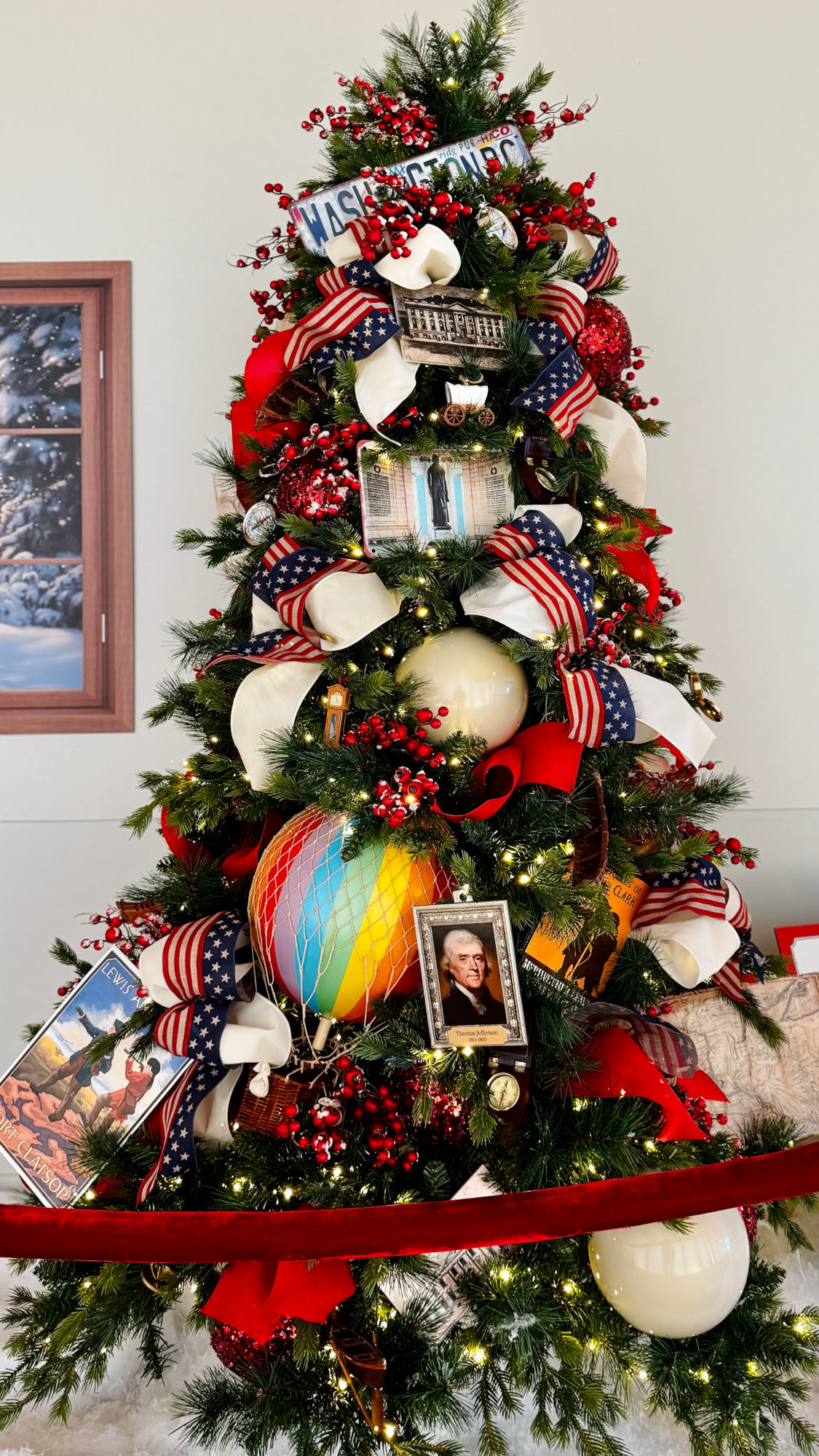
1800 to 1809
American Christmas Tree

Washington DC
November 17, 1800
Congress held its first session in Washington, D.C.
The 6th Congress met in the unfinished Capitol Building.
- The Constitution called for the creation of a federal district that was not part of any state, under exclusive jurisdiction of the U.S. Congress. In 1801 the District of Columbia was officially made that federal district. Before this the U.S Capital operated out of its largest city: Philadelphia.
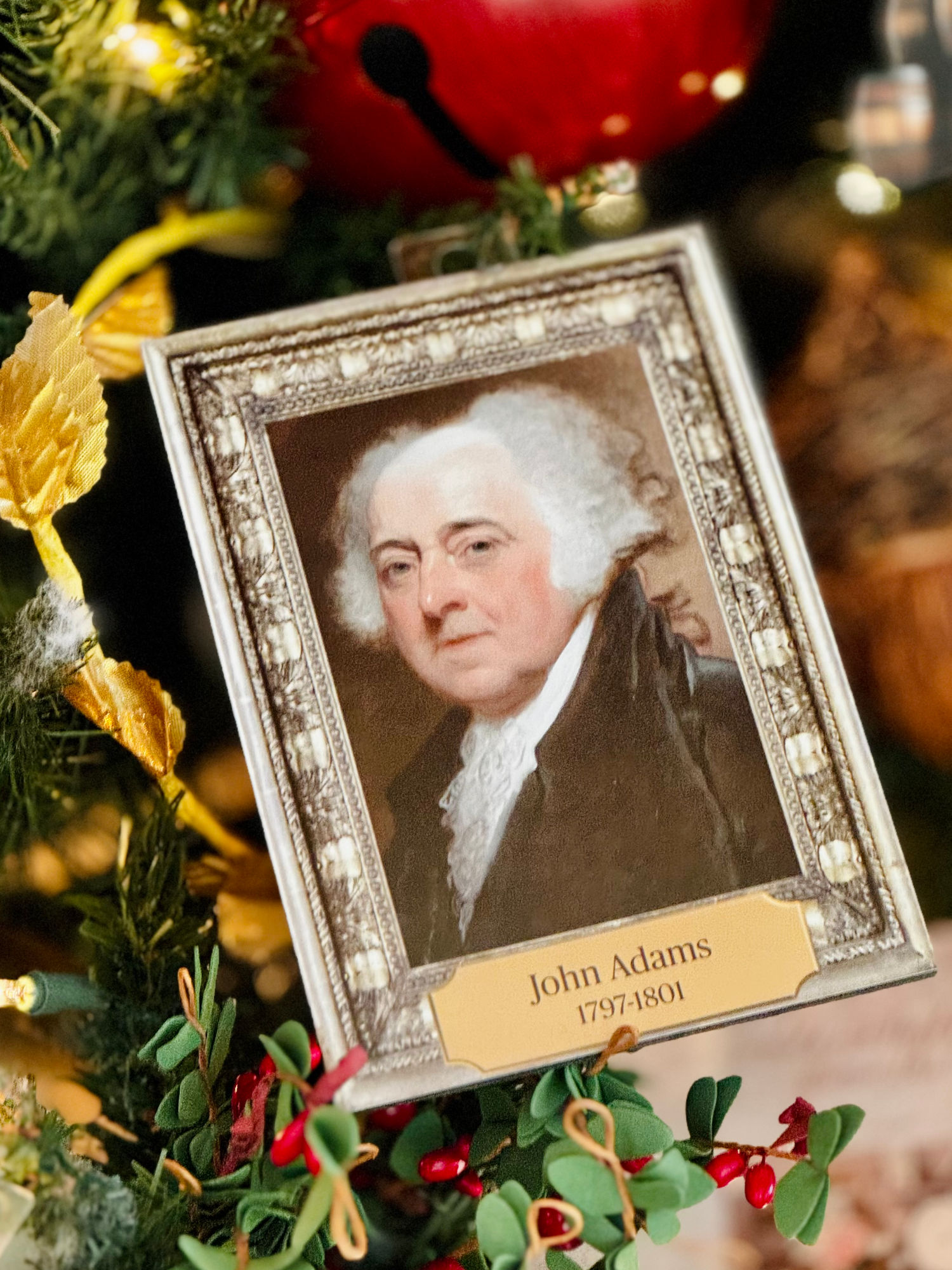
John Adams
President from 1797 to 1801
Second U.S. President (Federalist Party)
He was also the first Vice President under Washington (for two terms from 1789 to 1797). He lost his bid for reelection to his Vice President Thomas Jefferson (Jeffersonian Republican Party)
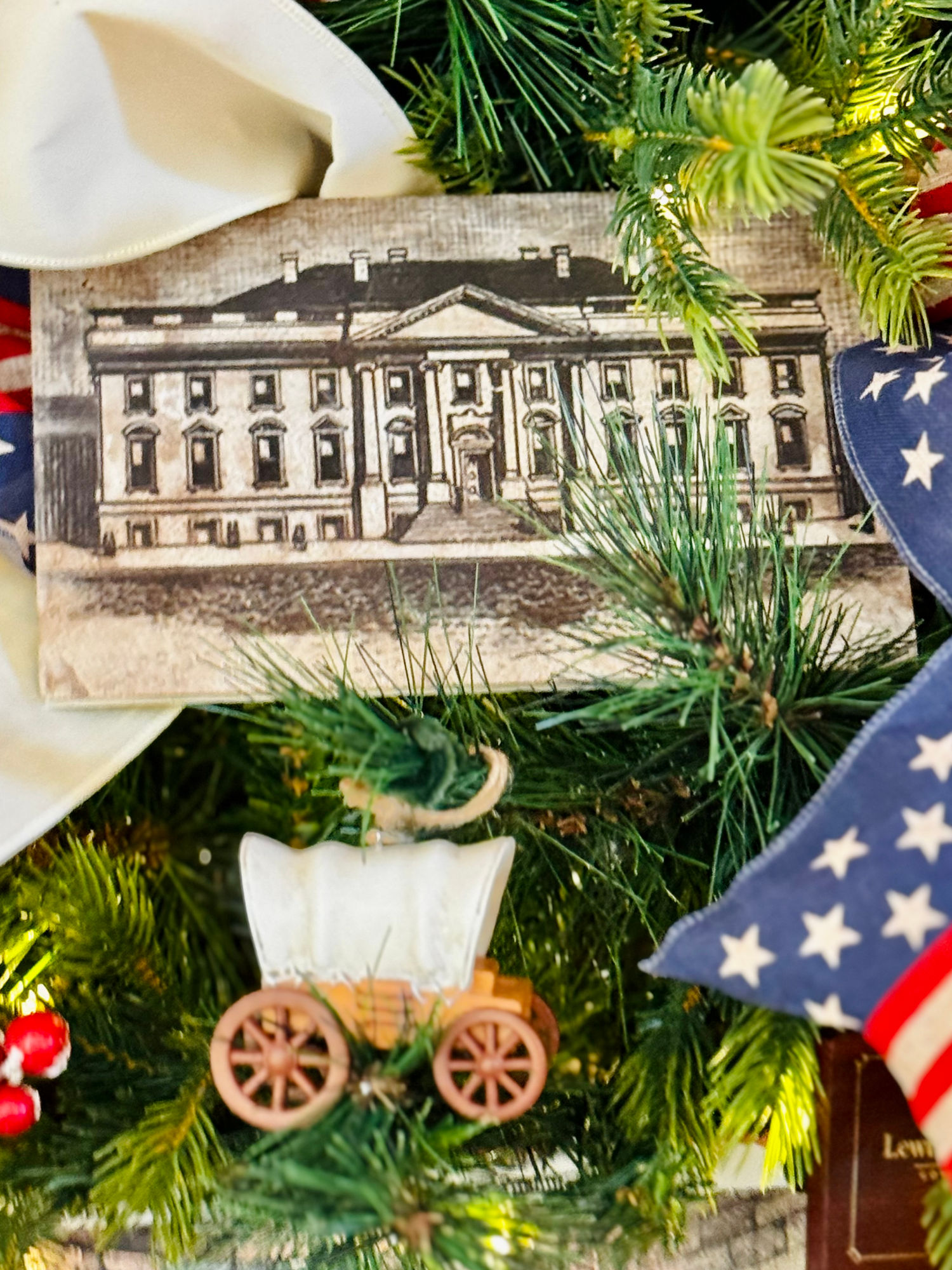
The White House
November 1, 1800
John Adams was the first president to move into the newly finished White House. A few months later Thomas Jefferson became president so he moved in. He added the East and West Colonnades to conceal the laundry, add a stable, and some storage.
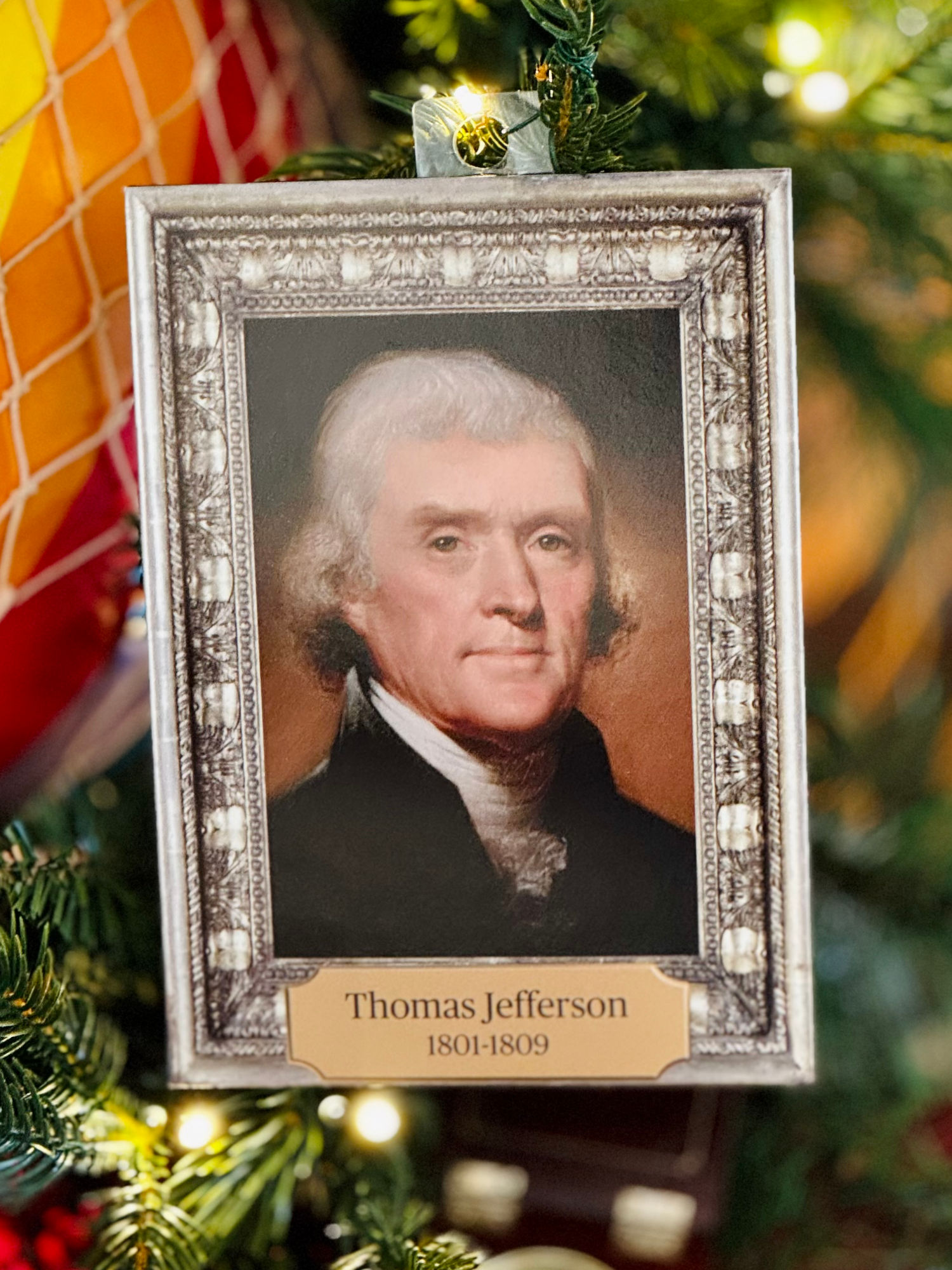
Thomas Jefferson
President from 1801 to 1809
3rd U.S. President (Jeffersonian Republican Party)
Main author of the Declaration of Independence. He was John Adams Vice President. He was also the first Secretary of State under George Washington.
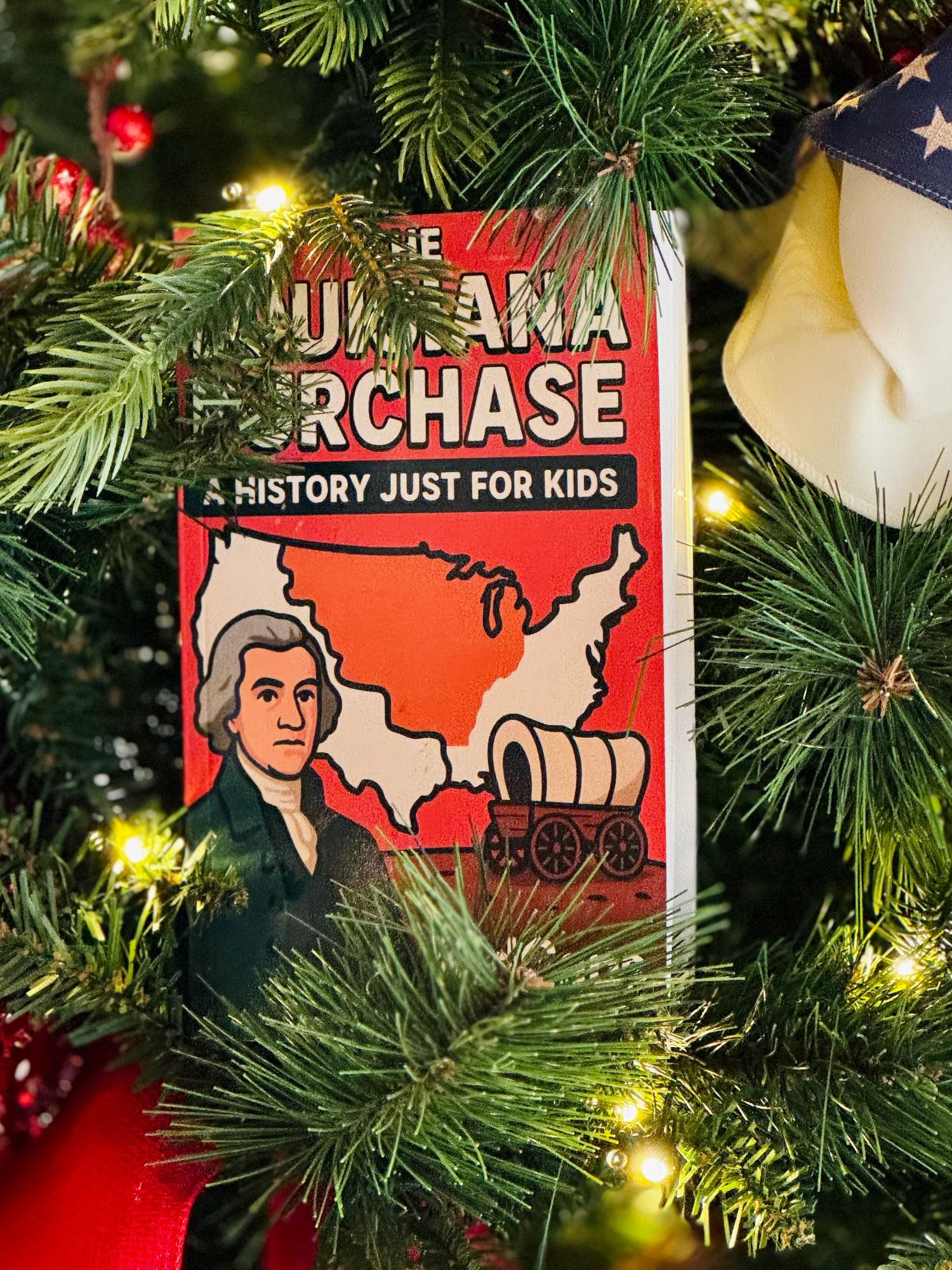
Louisiana Purchase
April 30, 1803
Doubled the size of the country
Most important to Jefferson was control of the Mississippi River port (New Orleans) so U.S Offered to buy if from France (who's armys were already spread too thin in the Caribbean and the UK). Napoleon agreed and the rest of the territory all the way up to Canada just kind of came with it. U.S bought 828,000 square miles from the French (about the middle fourth of the country today). Turns out France only controlled a little bit of this area, it was inhabited by the Native Americans.
- [amazon.com/dp/B008N06UFI]
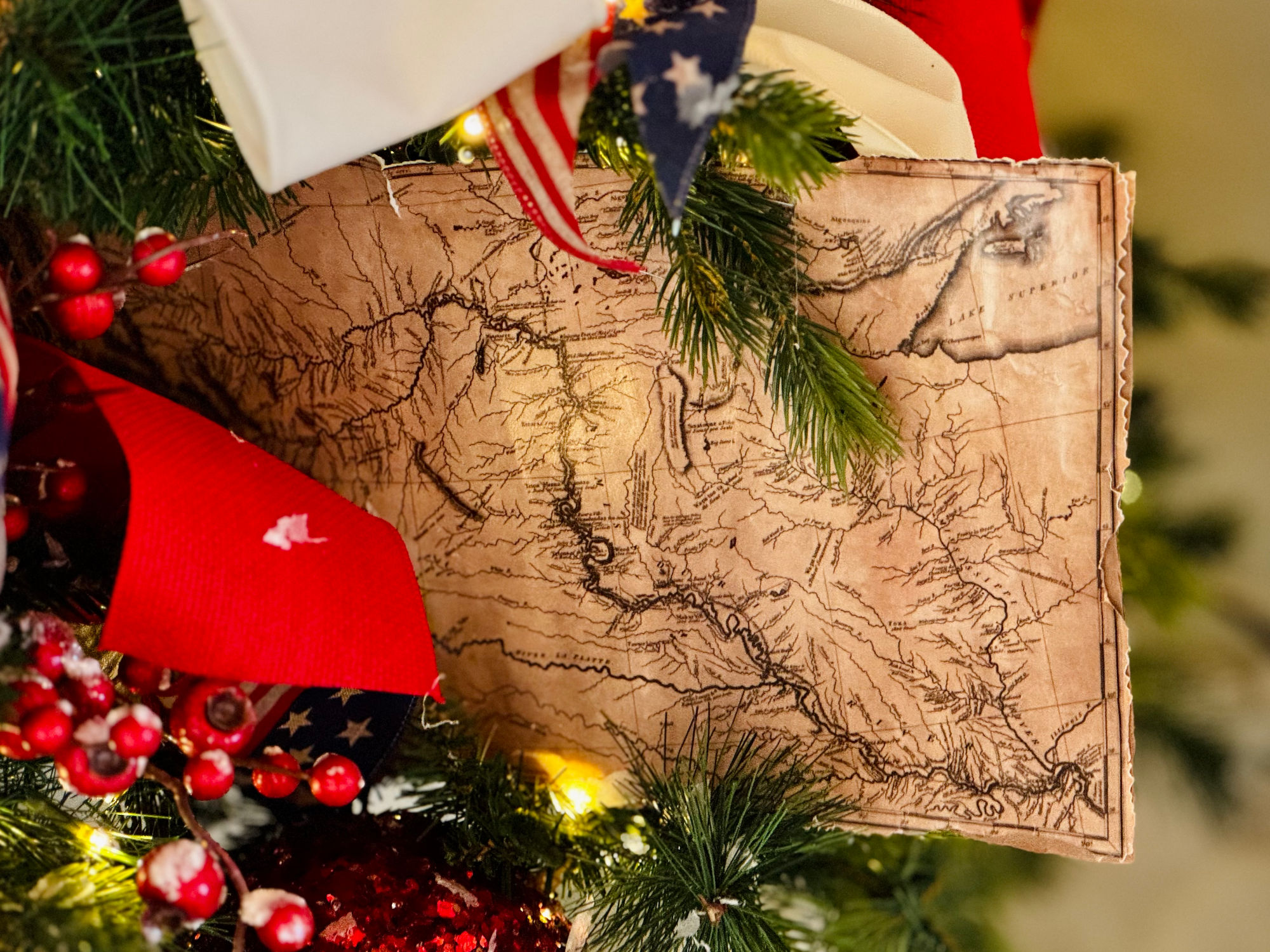
Lewis and Clark
May 14, 1804 to September 23, 1806
Began the Expedition by going up the Missouri River
President Thomas Jefferson asked them to cross the newly acquired Louisiana Purchase Territory.
- Establish an American presence in the new lands
- Make official diplomatic contact with Indian leaders (trade relations)
- Get detailed information on the area's natural resources
- Habitat
- Flora
- Fauna
- Mapping Topography
- Search for a northwest passage waterway for commerce
- Find a practical travel route avoiding the desert
From the Mississippi to the Pacific Ocean
- [loc.gov/resource/g4126s.ct000028/]
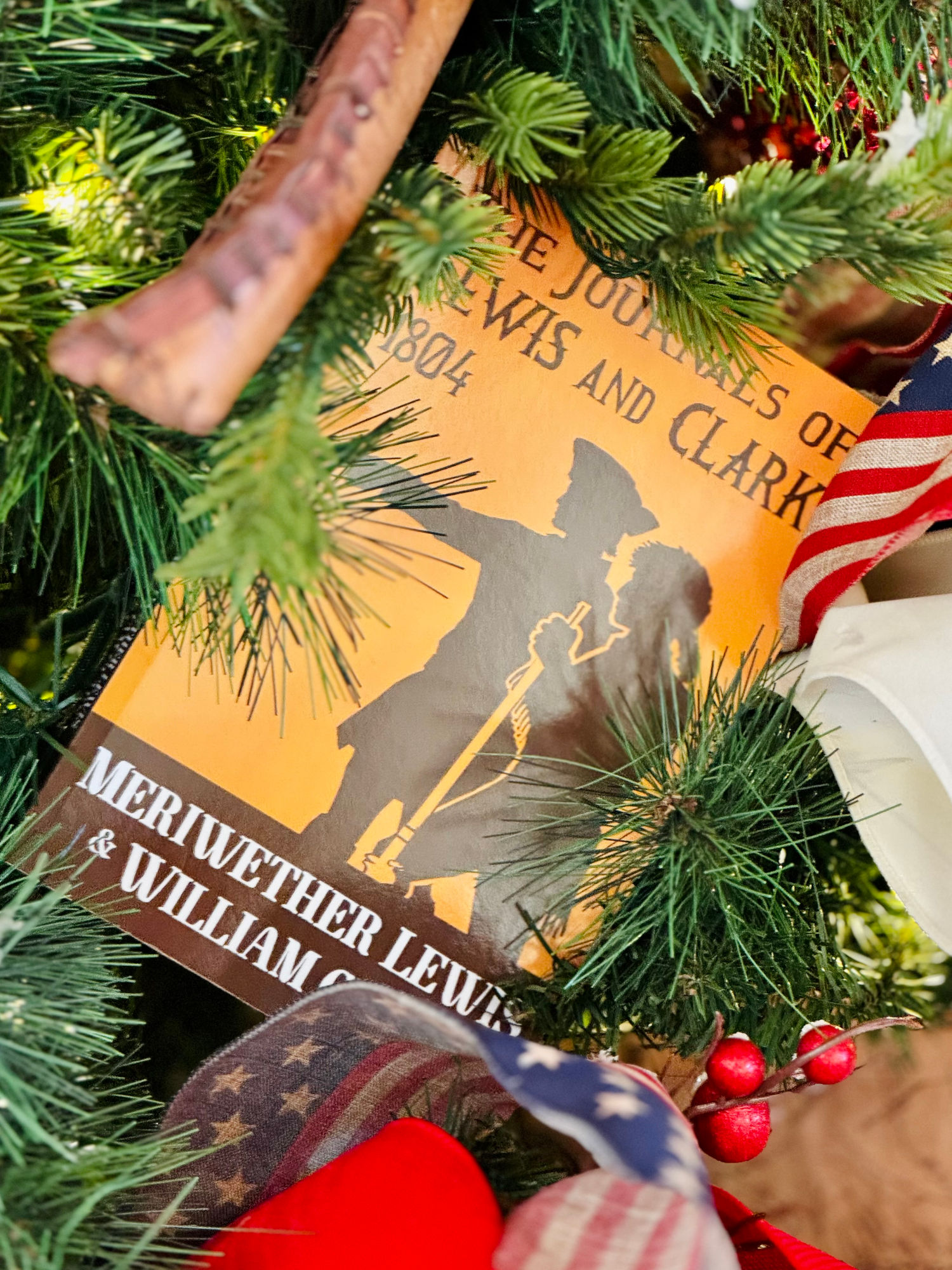
Lewis and Clark Journals
May 14, 1804
They recorded detailed observations of the expedition's daily activities, geographical discoveries, plants, animals, weather, geology, and interactions with various Native American tribes.
- [amazon.com/dp/1774265427]
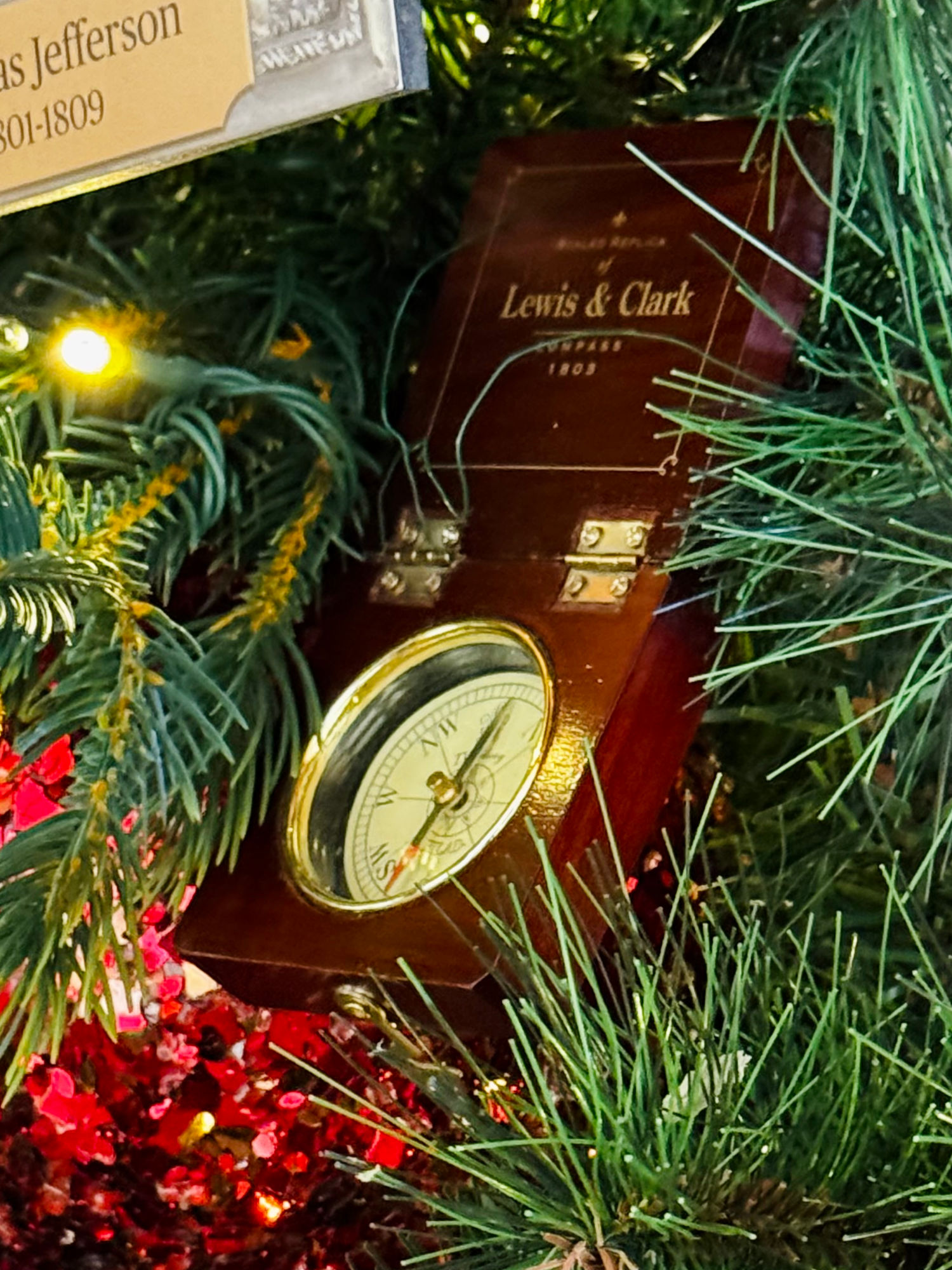
Compass
1804
Mapping
Lewis would put down in his journals the compass bearing between two points along the way (from the tip of a bluff along one side of the Missouri River to the tip of a sandbar along the other side). They also had larger compasses and instruments for mapping. Their daily routine was the measurement of latitude and longitude and the calculation of course, time, and distance of travel.

Theodolite
1804
Mapping
Mathematical instrument used for precise by triangulation. A known distance was measured out end to end then line angles were shot to a third point. That way the remaining sides of the triangle could be determined.
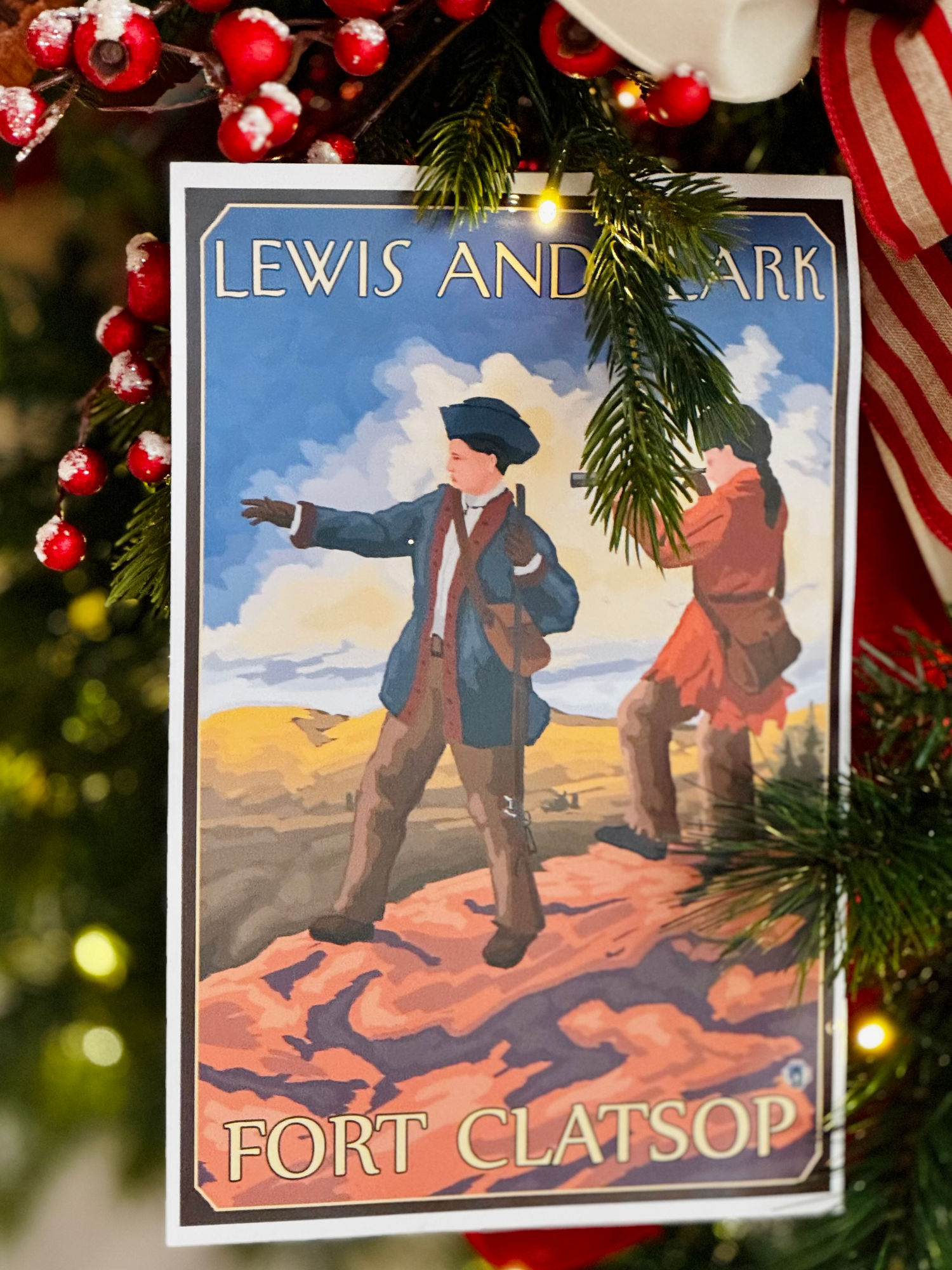
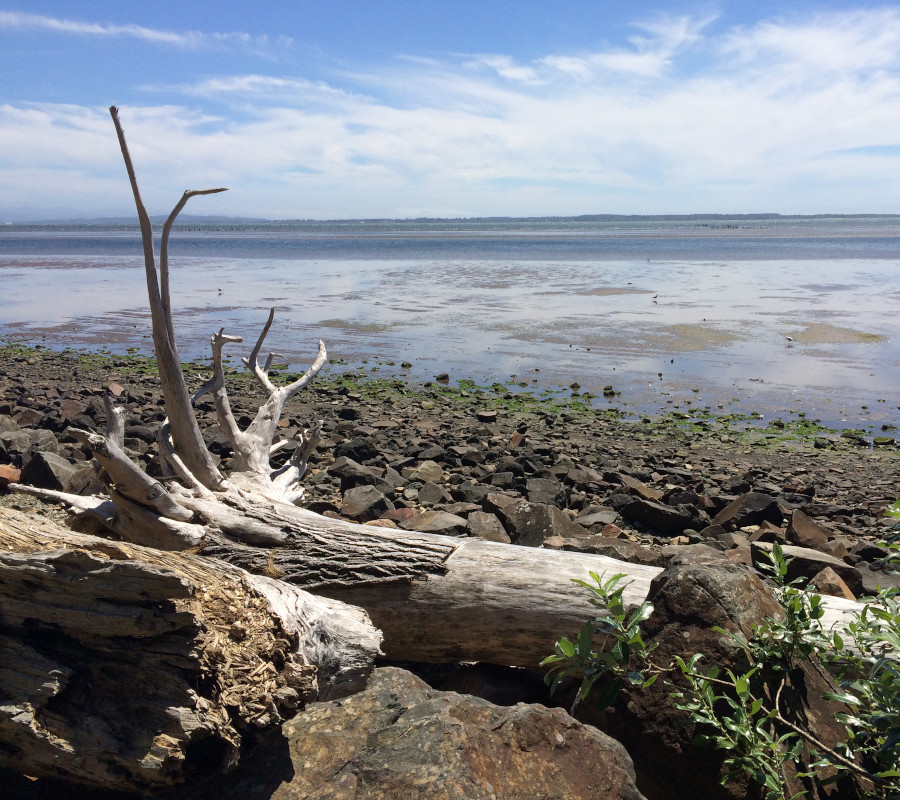
Fort Clatsop
December 8, 1805
Lewis and Clark
They built a log cabin encampment for the winter here before returning back to Saint Louis in the spring. It was at the Pacific Ocean at the Washington and Oregon borders. Long rainy winter.
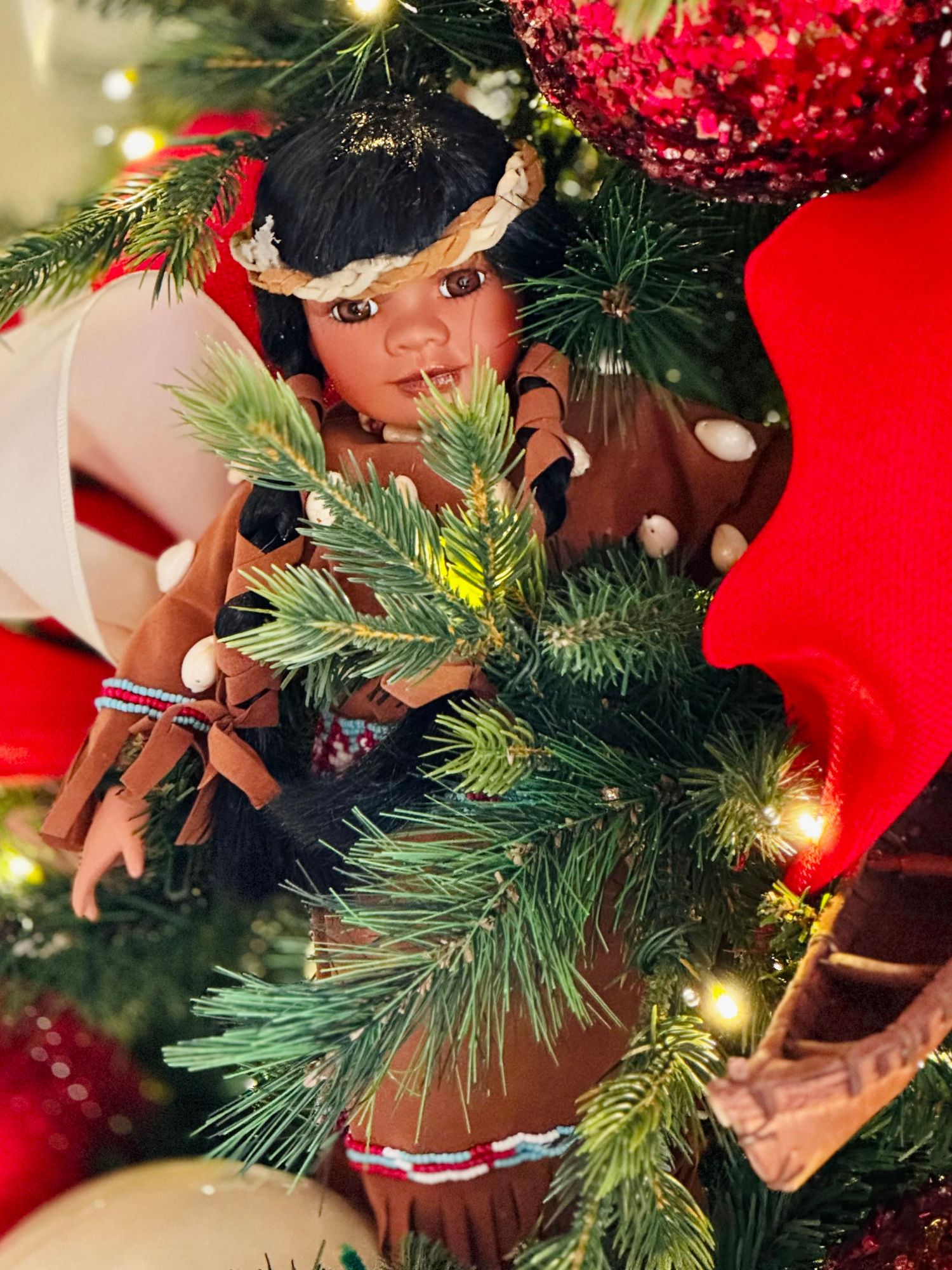
Sacajawea
February 11, 1806
Shoshone Guide
Sacagawea traveled with the Lewis and Clark expedition from North Dakota to the Pacific Ocean helping to establish contacts with Native Americans.
In 1800, when Sacagawea was about 12, the Sioux Indians raided her Shoshone tribe in Idaho. She was taken captive. She was then sold to Toussaint Charbonneau (a French Canadian Trapper) in North Dakota about a year later. A few years after that Lewis and Clark built Fort Mandan to wait out their first winter in North Dakota. They knew they would need an interpreter when the expedition continued in spring. In November they hired Charbonneau because he spoke several Native languages and because one of his wives (Sacagawea) spoke Shoshone. Sacagawea was pregnant and gave birth at Fort Mandan in February.

Chinook Canoe
March 23, 1806
Lewis and Clark
Used during the return trip. They were about 30 feet long and up to three feet wide, with a capacity of two to three tons. Some Chinook Canoes were over 50 feet and carried up to 30 people. They had holes in the sides to put crossbars through to make it easy to carry on land. The Corps of Discovery required 2 canoes for the journey home. Lewis tried to trade for a canoe from the Clastop people but they refused to trade so they stole one.
In order to see as much of the territory as possible on the way back to St. Louis the group traveled two different routes. Lewis went north to explore the Marias River while Clark went south to the Yellowstone River and reunited in North Dakota where the rivers come together.
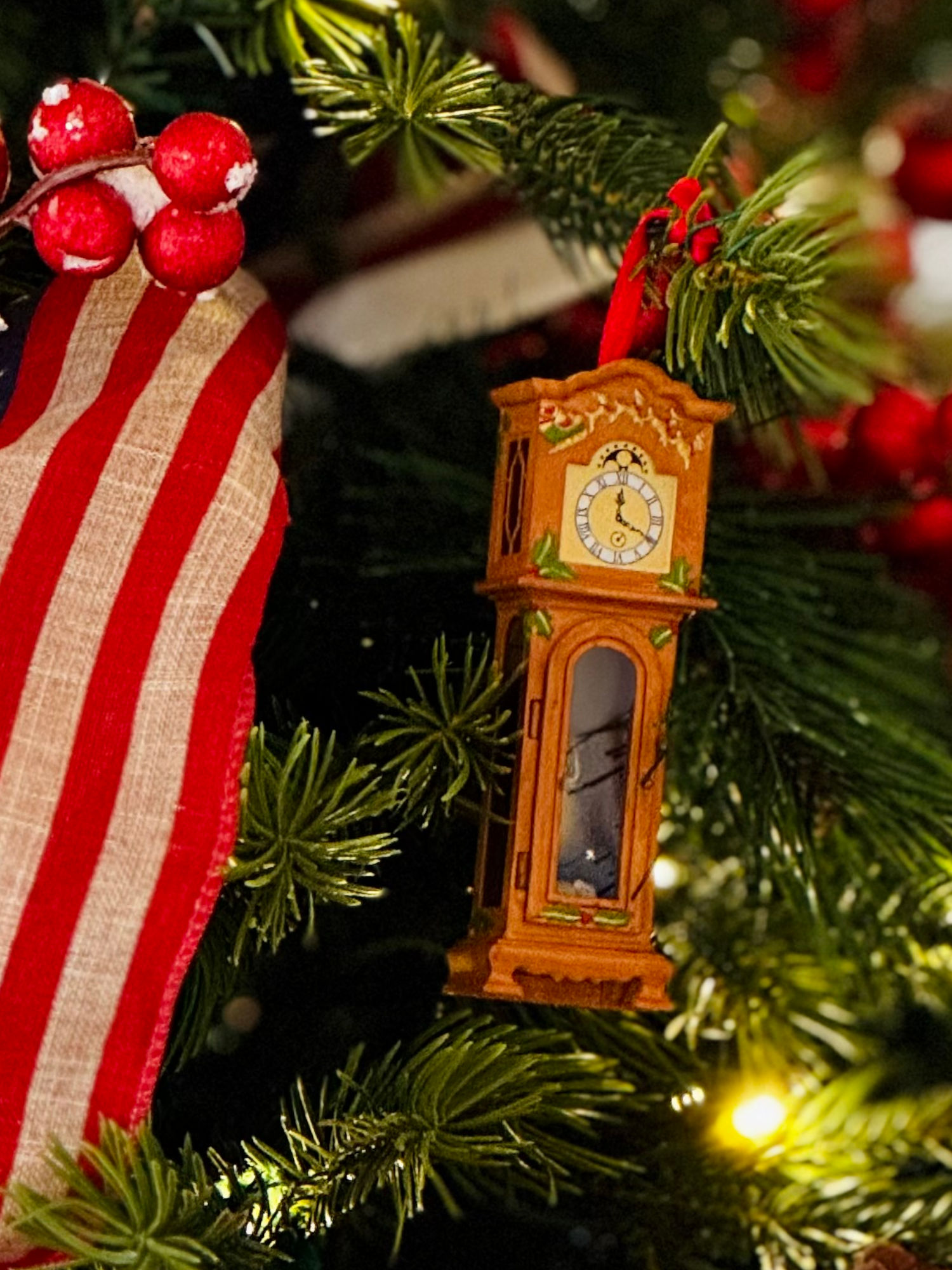
Longcase Clock
1806
Eli Terry
A skilled craftsman could produce six to ten clocks per year. Eli Terry created jigs that mass-produced uniform, interchangeable clock parts. Clock making went from being a craft to a factory process. In 1809 his workshop produced 3,000 wooden clocks. This made clocks affordable for everyday Americans. Industrializing the manufacture of complex interchangeable parts fundamentally transformed society.
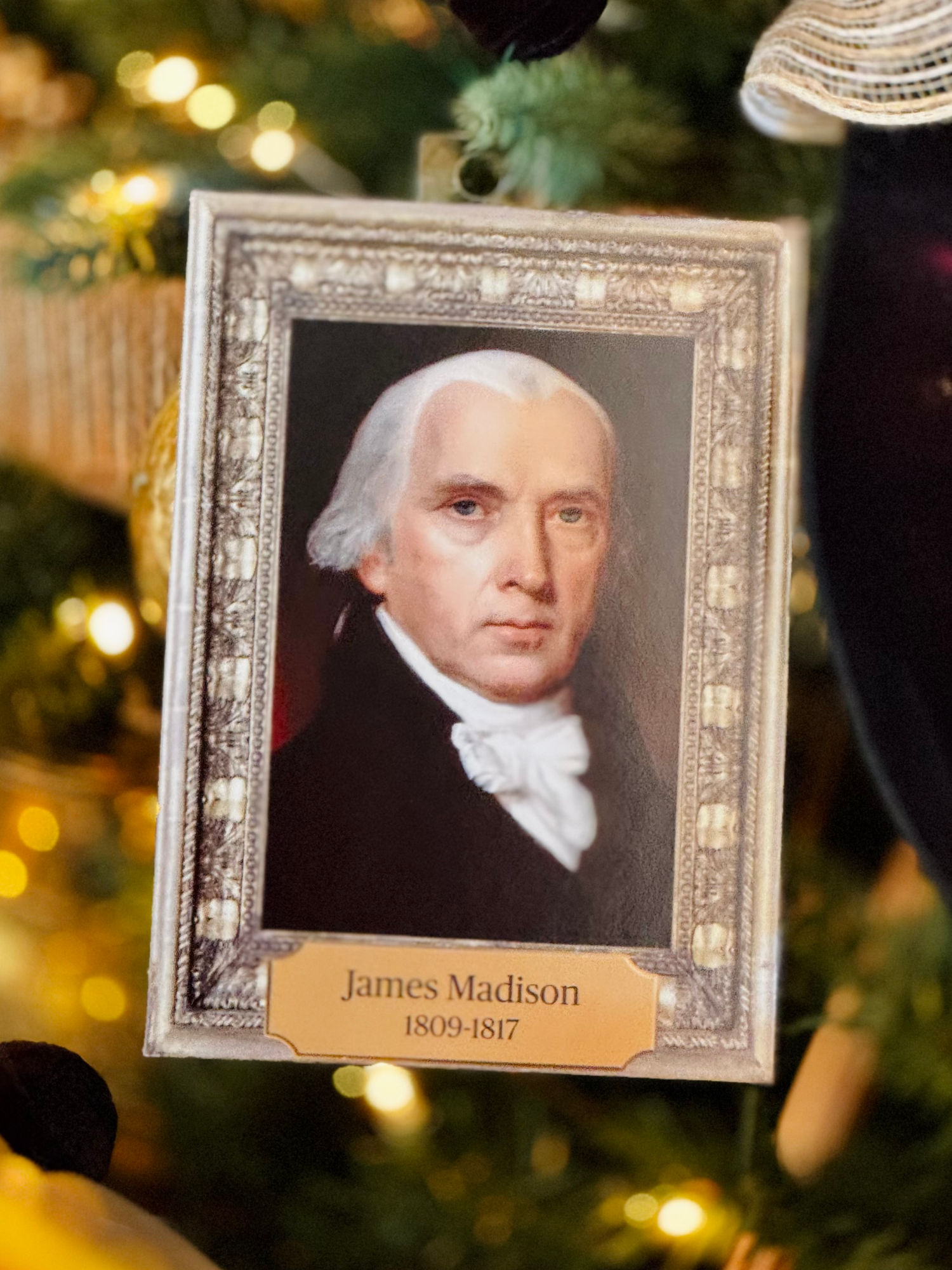
James Madison
President from 1809 to 1817
Fourth U.S. President (Jeffersonian Republican Party)
Known as the Father of the Constitution. Was Jefferson's Secretary of State from 1801 to 1809.