CHRISTMAS:




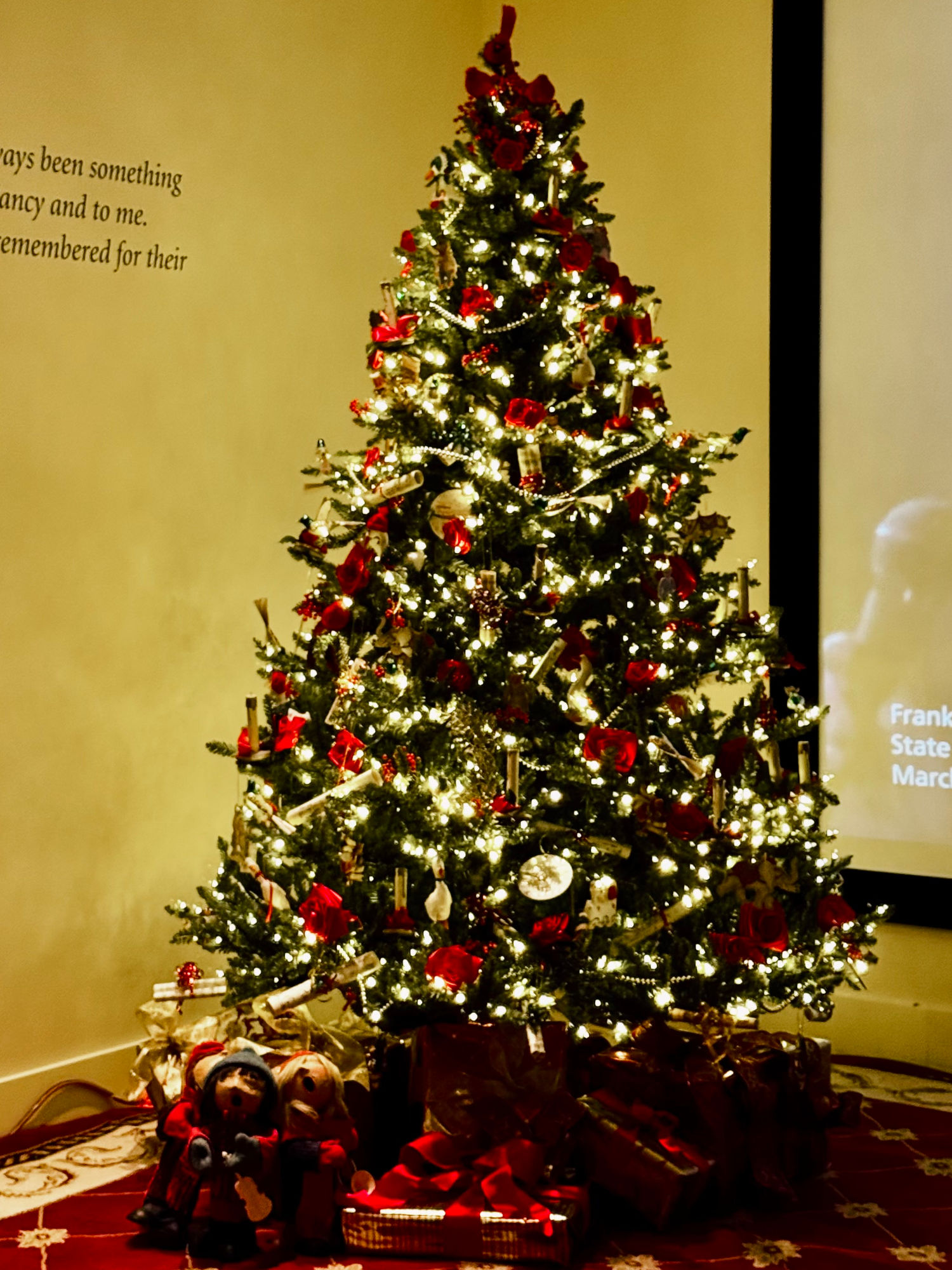
2025
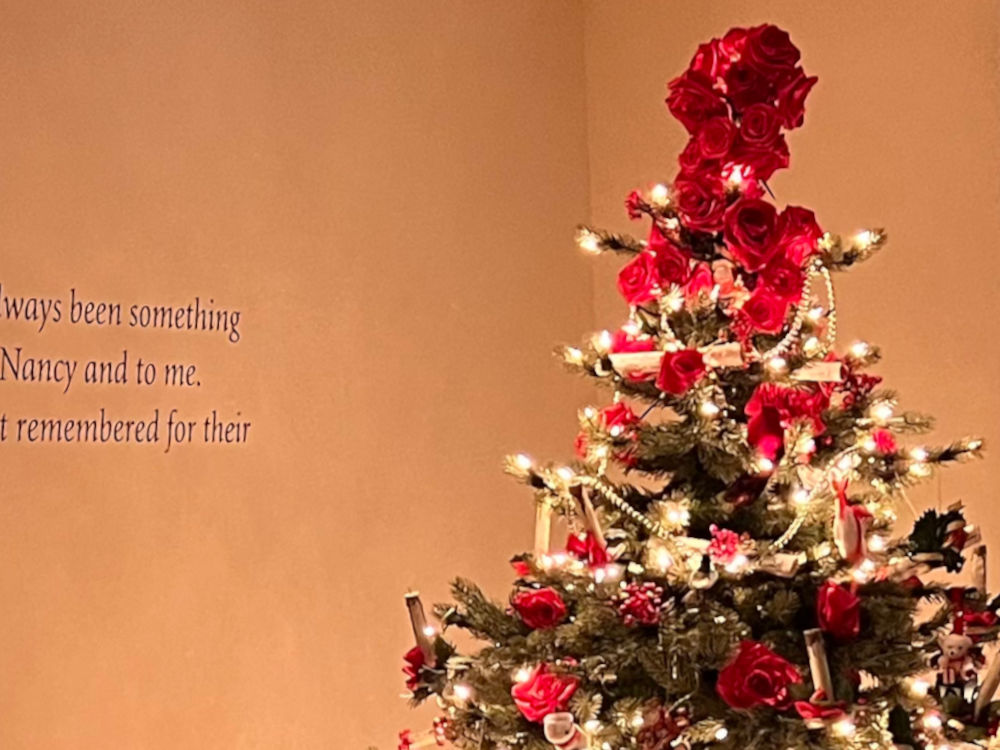
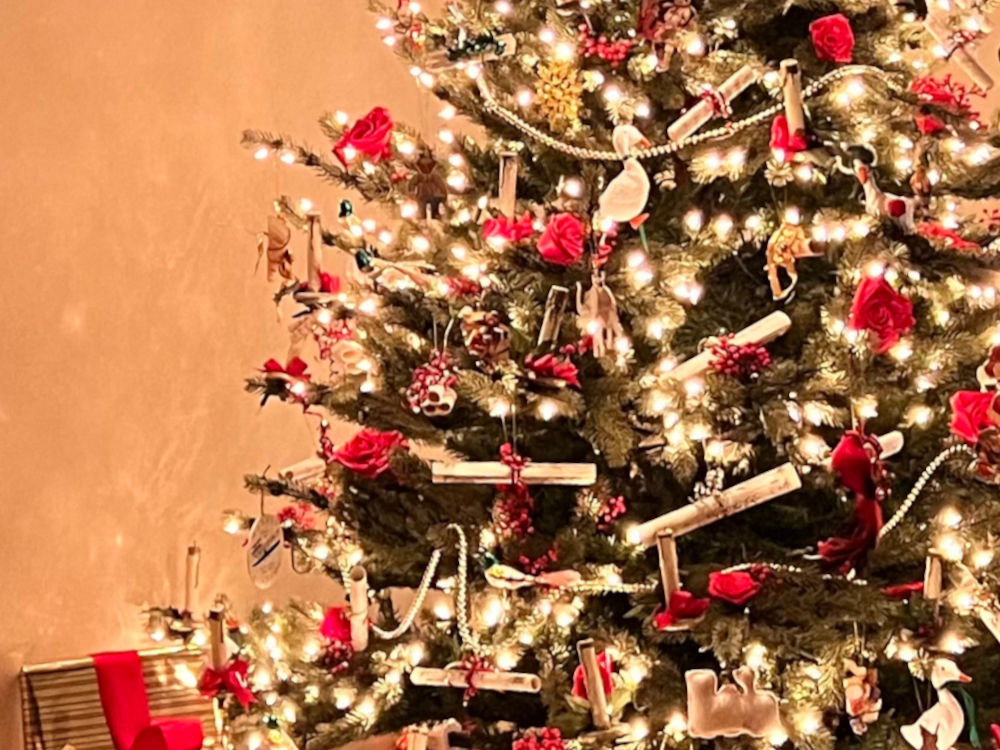
Reagan's the People's Tree at the Reagan Library
For the Reagans' first Christmas, the White House tree was trimmed with handmade ornaments from the Museum of American Folk Art in New York. Mrs. Reagan pitched in to help decorate the official tree in the Blue Room. A dozen smaller trees adorned other state rooms.
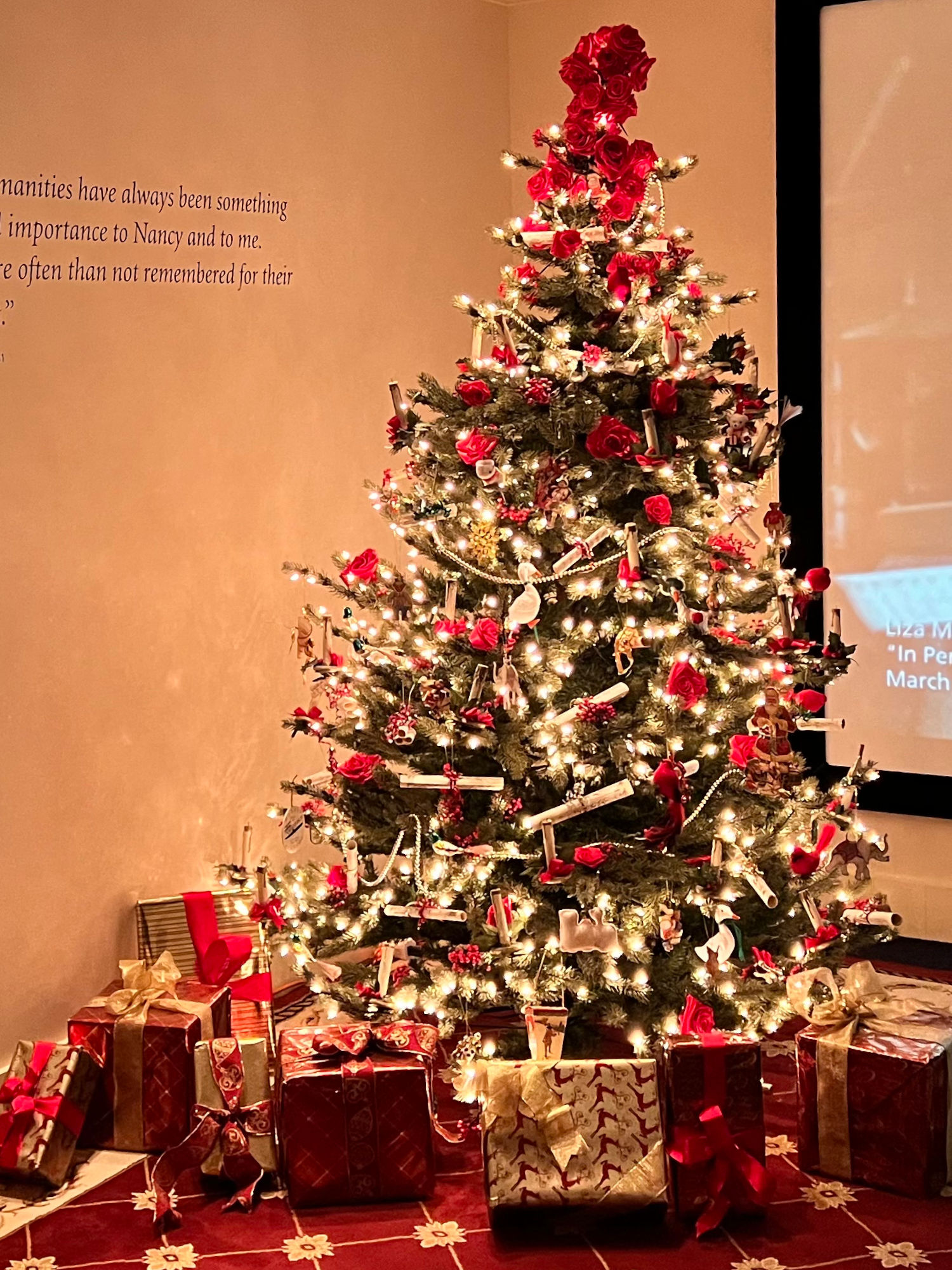
2023
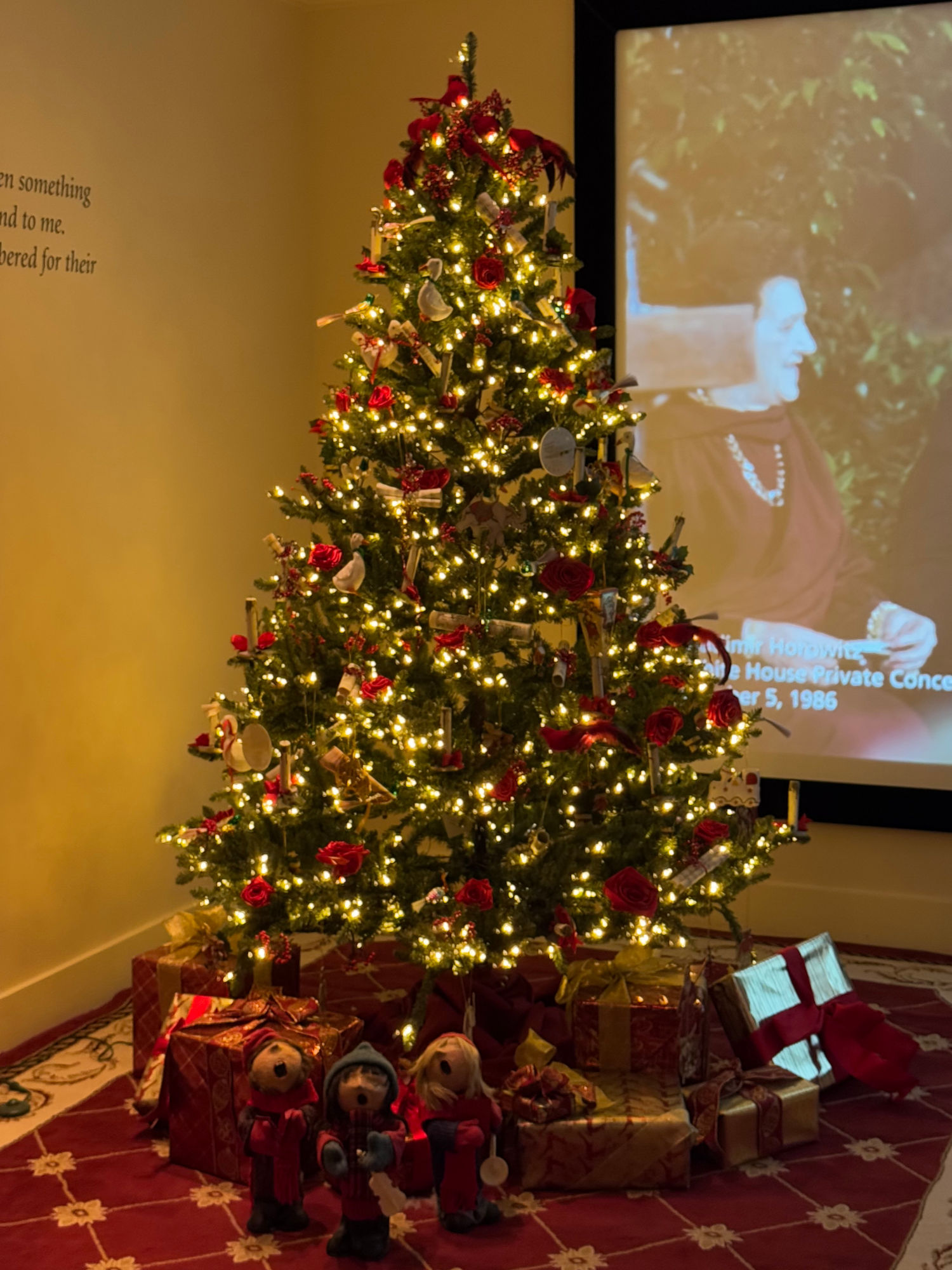
2024

How 25 Christmas Traditions Got Their Start
History.comFrom its Puritan roots to complaints of rampant commercialism ("What is it you want?" Charlie Brown asks Lucy in A Charlie Brown Christmas. "Real Estate."), Christmas in America has been filled with traditions, old and new. Some date back to 16th-century Germany or even ancient Greek times, while others have caught on in modern times.Here's a look at 25 ways Americans have celebrated the Christmas season, from singing songs and reciting poems to decorating trees and swapping cookies to drinking eggnog and wearing ugly sweaters.
- Christmas Trees
Decorated trees date back to Germany in the Middle Ages, with German and other European settlers popularizing Christmas trees in America by the early 19th century. A New York woodsman named Mark Carr is credited with opening the first U.S. Christmas tree lot in 1851. A 2019 survey by the American Christmas Tree Association, predicted that 77 percent of U.S. households displayed a Christmas tree in their home. Among the trees on display, an estimated 81 percent were artificial and 19 percent were real.- The Rockettes
Since 1925, first known as the Missouri Rockets, this iconic dance troupe has been kicking up its heels, officially becoming the Radio City Music Hall Rockettes in 1934. From performing at movie openings to entertaining troops to making TV appearances, they're perhaps best known for their annual Christmas Spectacular.- A Charlie Brown Christmas
Decades later, it may be hard to imagine that this beloved TV special inspired by Charles Schulz's Peanuts comic strip was first rejected by CBS executives. But when it finally aired on December 9, 1965, almost half of all U.S. TV sets were tuned to the broadcast, and the show went on to win an Emmy, a Peabody, an enduring following and even a trend of "Charlie Brown" Christmas trees. "I never thought it was such a bad little tree," Linus says in the special. "It's not bad at all, really. Maybe it just needs a little love."- Christmas Pickles
If there's a pickle among your snowman, angel and reindeer ornaments, you're likely taking part in the American tradition of hiding the green ornament on the tree, so that the first child to find it wins a gift, or gets to open the first present Christmas morning. The practice's origins are a bit murky (or should that be briny?), but, it's likely it grew from a Woolworths marketing gimmick from the late 1800s, when the retailer received imported German ornaments shaped like a pickle and needed a sales pitch.- Elf on the Shelf
Love it or loathe it, since 2005, moms and dads have either joyously or begrudgingly been hiding a toy elf each night from Thanksgiving to Christmas. More than 13 million elves have been "adopted" since 2005 when Carol Aebersold and her daughter, Chanda Bell, published the book Elf on the Shelf: A Christmas Tradition that comes with the toy. Social media has even inspired some parents to set up elaborate scenarios for their elves-as in: He TP'd the tree! She filled the sink with marshmallows!- Yule Log
Yule logs were part of ancient winter solstice celebrations, but it was Americans who turned the wood burning into must-see TV. Back in 1966, WPIX-TV in New York City aired a continuous 17-second loop of a fireplace for three hours along with holiday music. That led to eventual better production and nearly 20 years of annual viewing. Today, you can view the yule log on demand and on the web.- Advent Calendars
Early versions of this tradition, started in Germany in 1903 by publisher Gerhard Land, offered a way for children to count down to Christmas by opening one "door" or "window" a day to reveal a Bible passage, poem or small gift. Since gaining mass popularity by 1920, the calendars have evolved to secular calendars that include daily gifts from mini bottles of wine to nail polish to chocolates to action figures.- Gingerbread Houses
Although Queen Elizabeth I gets credit for the early decorating of gingerbread cookies, once again, it's the Germans who lay claim to starting the gingerbread house tradition. And when the German Brothers Grimm wrote "Hansel and Gretel" a new holiday tradition was born. Today, the edible decorations are available in a slew of pre-packed kits.- The Nutcracker
For many, the holiday season is not complete without a trip to watch this ballet. With music by Pyotr Ilyich Tchaikovsky and originally choreographed by Marius Petipa, the romantic tale of the young Clara's Christmas Eve premiered Dec. 18, 1892, in St. Petersburg, Russia. It was performed for the first time outside of Russia in 1934 in England and made its way to the United States in 1944 when it was performed by the San Francisco Ballet. It became a must-see event in America in the 1960s, as performances spread across the nation.- Ugly Christmas Sweaters
You can blame our neighbors to the north for this silly, ironic tradition that really gained steam in the 1980s. According to the Ugly Christmas Sweater Party Book, sweaters became a party trend in Vancouver, Canada in 2001. And the trend is seemingly here to stay. According to Fox Business, the ugly sweater industry is a multi-million business, with websites such as Tipsy Elves, retailers including Macy's, Kohl's and Target, and even food chains jumping on the ugly bandwagon.- Cookies and Milk for Santa
While leaving treats for Santa and his reindeer dates back to ancient Norse mythology, Americans began to sweeten up to the tradition during the Great Depression in the 1930s, as a sign of showing gratitude during a time of struggle.- Candy Canes
Whether devoured as a treat or hung on the tree as decoration, candy canes are the No. 1-selling non-chocolate candy during December, and date back to 1670 Germany. The red and white peppermint sticks arrived stateside in 1847, when a German-Swedish immigrant in Wooster, Ohio placed them on a tree. By the 1950s, an automated candy cane-making machine was invented, cementing their mass appeal.- Boozy Eggnog
Nothing makes the holidays like a glass of spiked eggnog. Although the yuletide cocktail stems from posset, a drink made with hot curdled milk and ale or wine from medieval England, American colonists get credit for making it popular and adding rum. Even George Washington had a special recipe.- Door Wreaths
Wreaths have been around since the ancient Greek and Roman times, but the evergreen Christmas wreath, often adorned with boughs of holly, eventually took on Christian meaning, with the circular shape representing eternal life and the holly leaves and berries symbolic of Christ's crown of thorns and blood, according to the New York Times. Today's wreaths, which come in all varieties, from flowers and fruit to glass balls and ribbon to artificial and themed, are most often seen as a secular winter tradition.- Christmas Cards
The first official Christmas card debuted in 1843 England with the simple message, "A Merry Christmas and a Happy New Year to You." The idea of a mailed winter holiday greeting gradually caught on in both Britain and the U.S., with the Kansas City-based Hall Brothers (now Hallmark) creating a folded card sold with an envelope in 1915. Today, according to the Greeting Card Association, more than 1.6 billion holiday cards are sold annually.- It's a Wonderful Life
Frank Capra's classic Christmas film debuted in 1946, with Jimmy Stewart playing George Bailey, a suicidal man who is shown what life would be like without him by an angel. But before becoming an annual TV-viewing tradition, the movie was a bit of a flop at the box office when it premiered, although it did receive five Oscar nominations (but no wins). A lapsed copyright in the 1970s allowed TV stations to air the movie for free. It has aired exclusively on NBC and USA since 1994.- Christmas Lights
Thomas Edison may be famous for the light bulb, but it was his partner and friend, Edward Hibberd Johnson, who had the bright idea of stringing bulbs around a Christmas tree in New York in 1882. By 1914, the lights were being mass-produced and now some 150 million sets of lights are sold in the U.S. each year.- Department Store Santa
Lining up at the mall to snap a photo of the kids on Santa's lap may seem like a modern Christmas tradition, but it dates back to 1890, when James Edgar of Brockton, Massachusetts had a Santa suit made for him and dressed as the jolly fellow at his dry goods store. The gimmick caught on and a year later Santas could be found in many stores. While many point to Edgar as the original store Santa, Macy's in New York claims it has been hosting Santa since 1862.- Making Fun of Fruitcake
A favorite of the Brits (both Princess Diana and Kate Middleton served it at their weddings), fruitcake-that much-maligned mix of dried fruit, nuts and brandy-has been the subject of long-running American holiday jokes. Truman Capote wrote a short story about "fruitcake weather" in 1956, the small town of Manitou Springs, Colorado holds an annual Fruitcake Toss Day on January 3, and the dessert has become fodder for many a comedian. For example, in 1985 Johnny Carson cracked, "The worst Christmas gift is fruitcake. There is only one fruitcake in the entire world, and people keep sending it to each other."- Cookie Swaps
For more than 100 years, Americans have spent time baking up a storm to exchange cookies at one of these events where participants bring a dozen of their favorite cookies, then guests trade and head home with an array of goodies. In her book, The Cookie Party Cookbook, Robin Olson writes that she found references to "cookie parties" dating back to the late 1800s and that they began to be called "cookie exchanges" by the 1930s, and "cookie swaps" in the '50s. "Historically, cookie exchange parties have been a ladies-only event. Exchanges were hosted by friends, relatives, neighbors, social groups, clubs, office co-workers, teams, schools and churches," she writes. Now, they often include children and men and are frequently used as fund-raisers.- A Visit from Saint Nick
Best known as The Night Before Christmas, the reading of this classic by poet Clement Moore is an American holiday tradition. Believed to have been written on Christmas Eve of 1822, the New Yorker is said to have been inspired by his sleigh ride home. According to the U.S. Library of Congress, Clement, a professor at the General Theological Seminary in Manhattan, was "embarrassed by the work, which was made public without his knowledge in December 1823. Moore did not publish it under his name until 1844."- Luminarias
Simple, folded brown bags filled with sand and lit by votive candles are particularly popular in the Southwest. Dating back more than 300 years, they line sidewalks and churches in places such as Albuquerque and Santa Fe, New Mexico. In Phoenix, the annual Las Noches de las Luminarias at the Desert Botanical Garden features more than 8,000 luminaria bags.- 12 Days of Christmas
Even though most hear the song between Thanksgiving and Christmas Day, the Christian 12 days of Christmas, which span the birth of Jesus and the visit of the Magi, actually take place from December 25 to January 6. The earliest version of the poem-turned-song is thought to have been published in Mirth With-out Mischief, a children's book from 1780, with the modern version credited to English composer Frederic Austin who set the poem to music. Each year the PNC Christmas Price Index totals up the total cost of the 12 gifts named in the song based on current markets. For 2019, everything from a partridge in a pear tree to 12 drummers drumming would run up a bill of $38,993.59.- Poinsettias
America's Christmas flower, these plants native to Central America were brought to the United States (and given their name) by the country's first U.S. ambassador to Mexico, botanist Joel Roberts Poinsett, in the 1820s. It was a California horticulturist named Paul Ecke who brought the traditionally red and green plants to the masses 100 years later. He donated the plants to TV shows, and, according to the Los Angeles Times, the poinsettia became the best-selling potted plant in the nation by 1986.- Salvation Army Bell Ringers
Come December, bell-ringers span out to accept donations in their iconic red kettles. Collecting money for the needy since 1891, the tradition started with San Francisco Salvation Army Capt. Joseph McFee wanted to raise money to offer a free Christmas dinner to 1,000 of the city's most destitute. Inspired by a kettle he had seen in England in which people tossed in coins for the poor, he set up his own version, and the idea quickly spread across the country and the world. Today, the Salvation Army helps more than 4.5 million people during the holiday season and they don't only accept cash-donations can be made via smartphones.

Christmas in the USA
whychristmas.comChristmas in the United States of America
The United States of America has many different traditions and ways that people celebrate Christmas, because of its multi-cultural nature. Many customs are similar to ones in the UK, France, Italy, The Netherlands, Poland and Mexico.
- The traditional meal for Western European families is turkey or ham with cranberry sauce. Families from Eastern European origins favour turkey with trimmings, kielbasa/kielbasi (a Polish sausage), cabbage dishes, and soups; and some Italian families prefer lasagne! The meal is often eaten at the time it is eaten in the culture that people come from. This can be on Christmas Eve or Christmas day.
- For many Italian-American families a big Christmas Eve meal of different fish dishes is now a very popular tradition! It's known as The Feast of the Seven Fishes ('Festa dei sette pesci' in Italian). The feast seems to have its root in southern Italy and was bought over to the USA by Italian immigrants in the 1800s. It now seems more popular in America than it is in Italy!
- Some Americans use pop-corn threaded on string to help decorate their Christmas Tree. Making gingerbread houses is also popular to make and eat at Christmas! Eggnog is a 'traditional' Christmas drink in the USA.
- Many Americans, especially Christians will go to Church to celebrate the birth of Jesus at Christmas. Many churches have special Christmas Carol services and events where the story of Christmas is told. Christians believe that Jesus is the son of God.
- In New England (the American States of Massachusetts, Connecticut, Rhode Island, Vermont, New Hampshire and Maine), there are shops called 'Christmas Shops' that only sell Christmas decorations and toys all the year round!
- Americans also send out Christmas Cards, like Carol singing and there's the unusual custom of the Christmas Pickle!
- People in America like to decorate the outsides of their houses with lights and sometimes even statues of Santa Claus, Snowmen and Reindeer. Some cookies and glass of milk are often left out as a snack for Santa on Christmas Eve!
- Towns and cities often decorate the streets with lights to celebrate Christmas. Perhaps the most famous Christmas street lights in the USA are at the Rockefeller Center in New York where there is a huge Christmas Tree with a public ice skating rink in front of it over Christmas and the New Year.
- Christmas Trees were first put up in the USA by German immigrants in Pennsylvania. There were some community trees as early as the 1750s. But outside of these communities, trees would have been thought of as very odd!
- The Puritans, who founded much of New England the eastern USA only thought of Christmas as a religious festival. In 1659 a court in Massachusetts made a law that to do anything to mark December 25th, apart from going to Church, illegal!
- The first recorded tree in a home in the USA was set-up in 1832 by Charles Follen of Boston - who was a German political refugee. We know about it because of his wife's memoirs written 10 years later. There are more records of early American trees in diaries and letters from 1842 in Virginia, 1847 in Ohio and 1851 in South Carolina and Mississippi.
- A drawing of Queen Victoria and her family around the tree in Windsor Castle from 1848 was republished in Godey's Lady's Book, Philadelphia in December 1850 (but they removed the Queen's crown and Prince Albert's moustache to make it look 'American'!).
- The first recorded Christmas Tree lot selling trees in the USA was in New York in 1851 when a Mark Carr loaded two sleds with trees from the Catskill Mountains and sold them in the city. By the 1890s the Catskills were providing over 200,000 trees a year to the New York area!
- The first US president recorded with a tree at Christmas is Andrew Jackson in 1835. However, this tree was a small sugar frosted pine tree.
- The first Christmas Tree in the White House was set-up in 1856 when Franklin Pierce was president. The first electric lights on a tree at the White House was in 1895 when Grover Cleveland used them. The tradition of having a tree on the lawn of the White House was started in 1923 by Calvin Coolidge.
- Trees became more popular in the late 1800s and early 1900s when more people had them in their houses and cities started having communal lighted trees. There was a tree in San Diego in 1904, in Pasadena in 1909, in New York, Boston and Cleveland in 1912 and in Philadelphia in 1914.
- Frank Woolworth started selling glass ornaments in his stores in 1880. In 1910 the Sears catalogue started selling ornaments by mail order.
- According to The Guinness World Records, the tallest cut Christmas tree was a 67.36m (221 ft) Douglas fir setup at the Northgate Shopping Center in Seattle, Washington, USA, in December 1950.
- In Hawaii, Santa is called Kanakaloka!
- Customs such as Mumming take place in some communities. On New Year's Day in Philadelphia there is a Mummer's Day parade which lasts over six hours! Clubs called "New Years Associations" perform in amazing costumes which take months to make. There are four categories (Comics, Fancies, String Bands, and Fancy Brigades) which are judged.
- In the Southwest USA, there are some special customs which have some similarities to those in parts of Mexico. These include 'luminarias' or 'farolitos'. These are paper sacks, with shapes cut into them, which are partly filled with sand and then have a candle put in them. They are lit on Christmas Eve and are put the edges of paths. They represent 'lighting the way' for somewhere for Mary and Joseph to stay.
- A popular food at Christmas in the Southwest USA are tamales.
- In the south of Louisiana, on Christmas Eve, families in small communities along the Mississippi River light bonfires along the levees (the high river banks) to help 'Papa Noel' (the name for Santa in French as Louisiana has a strong historical connection with France) find his way to the children's homes!

USA
WIKIPEDIAThe United States of America
Also known as the United States (U.S.) or America, is a country primarily located in North America. It is a federal republic of 50 states and a federal capital district, Washington, D.C. The 48 contiguous states border Canada to the north and Mexico to the south, with the semi-exclave of Alaska in the northwest and the archipelago of Hawaii in the Pacific Ocean. The United States also asserts sovereignty over five major island territories and various uninhabited islands in Oceania and the Caribbean. It is a megadiverse country, with the world's third-largest land area and third-largest population, exceeding 340 million.
- Paleo-Indians first migrated from North Asia to North America over 12,000 years ago, and formed various civilizations.
- Spanish colonization established Spanish Florida in 1513, the first European colony in what is now the continental United States.
- British colonization followed with the 1607 settlement of Virginia, the first of the Thirteen Colonies.
- Enslavement of Africans was practiced in all colonies by 1770 and supplied most of the labor for the Southern Colonies' plantation economy.
- Clashes with the British Crown began as a civil protest over the illegality of taxation without representation in Parliament and the denial of other English rights. They evolved into the American Revolution, which led to the Declaration of Independence and a society based on universal rights.
- Victory in the 1775-1783 Revolutionary War brought international recognition of U.S. sovereignty and fueled westward expansion, further dispossessing native inhabitants.
- As more states were admitted, a North-South division led the Confederate States of America to attempt secession and fight the Union in the 1861-1865 American Civil War.
- With the United States' victory and reunification, slavery was abolished nationally.
- By 1900, the country had established itself as a great power, a status solidified after its involvement in World War I.
- Following Japan's attack on Pearl Harbor in 1941, the U.S. entered World War II. Its aftermath left the U.S. and the Soviet Union as rival superpowers, competing for ideological dominance and international influence during the Cold War.
- The Soviet Union's collapse in 1991 ended the Cold War, leaving the U.S. as the world's sole superpower.
The U.S. national government is a presidential constitutional federal republic and representative democracy with three separate branches: legislative, executive, and judicial. It has a bicameral national legislature composed of the House of Representatives (a lower house based on population) and the Senate (an upper house based on equal representation for each state). Federalism grants substantial autonomy to the 50 states. In addition, 574 Native American tribes have sovereignty rights, and there are 326 Native American reservations. Since the 1850s, the Democratic and Republican parties have dominated American politics, while American values are based on a democratic tradition inspired by the American Enlightenment movement.
A developed country, the U.S. ranks high in economic competitiveness, innovation, and higher education. Accounting for over a quarter of nominal global GDP, its economy has been the world's largest since about 1890. It is the wealthiest country, with the highest disposable household income per capita among OECD members, though its wealth inequality is highly pronounced. Shaped by centuries of immigration, the culture of the U.S. is diverse and globally influential. Making up more than a third of global military spending, the country has one of the strongest militaries and is a designated nuclear state. A member of numerous international organizations, the U.S. plays a major role in global political, cultural, economic, and military affairs.
EPTYMOLOGYAmerica
"America" is the feminine form of the first word of Americus Vesputius, the Latinized name of Italian explorer Amerigo Vespucci (1454-1512); it was first used as a place name by the German cartographers Martin Waldseemuller and Matthias Ringmann in 1507.In English, the term "America" usually does not refer to topics unrelated to the United States, despite the usage of "the Americas" to describe the totality of the continents of North and South America.
The United States of America
Documented use of the phrase "United States of America" dates back to January 2, 1776.